
Deep Dive · Robotics
FCC Rules for Robotics: What to Check Before You Build
The rules behind the headlines, the parts worth checking and the records to take to your suppliers and advisers.
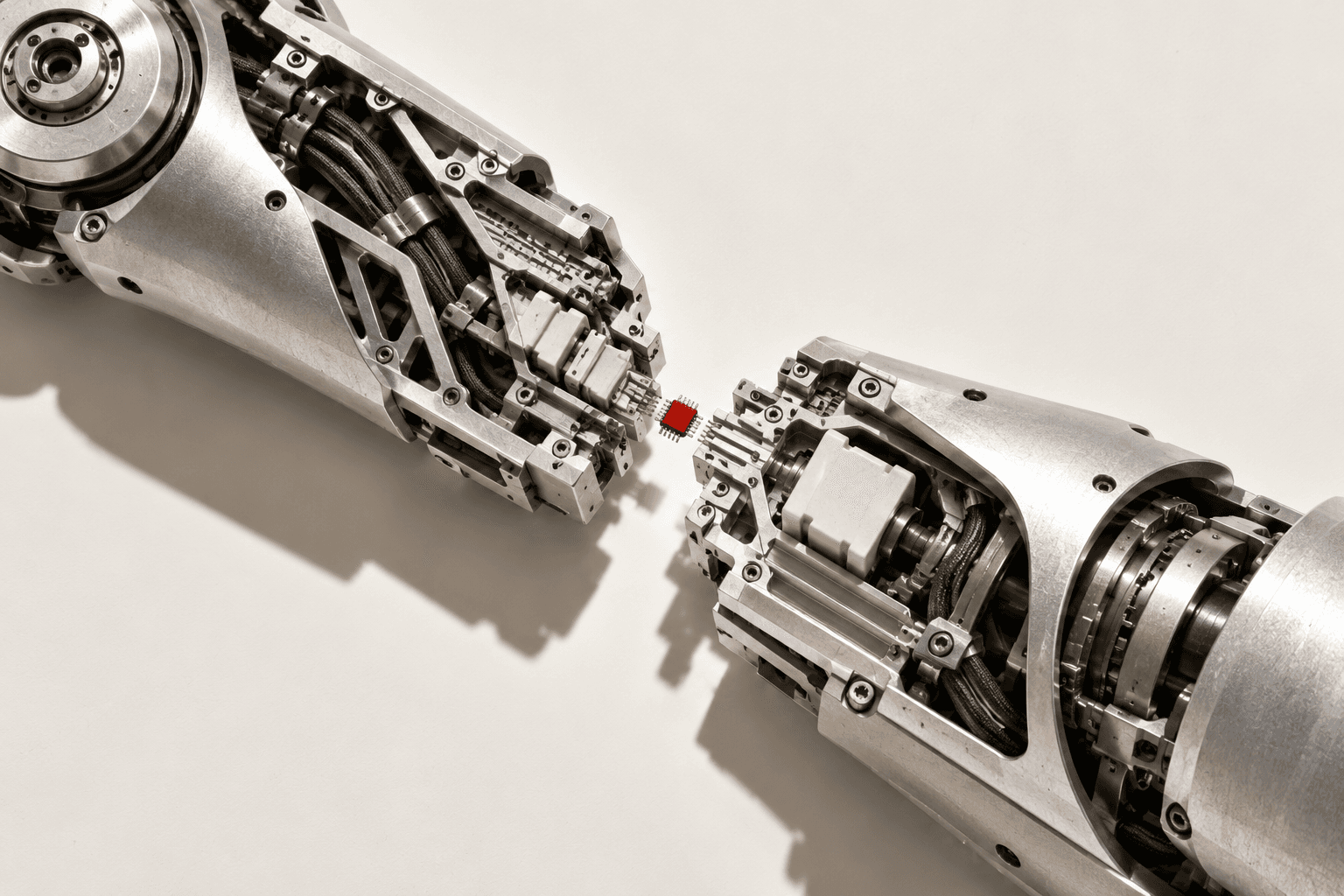
Building a robot for the US market? Start here.
The Federal Communications Commission, or FCC, regulates radio and digital equipment entering the US market. Most connected robots need equipment authorization before import or sale. The Covered List can block that route for equipment considered a national security risk.
Before choosing suppliers, check two things: whether the finished robot falls within a restricted equipment category, and whether its electronics come from a producer covered by the component rules. Start with the robot, then use the reference below to look up suppliers and collect the records your reviewer needs.
Already selling a robot? Check the existing authorization
An existing FCC authorization can let a company keep selling an established model after a new restriction takes effect. What matters is the authorization covering that model and configuration. A first sale, preorder or product announcement does not establish that protection.
The FCC’s July robotics guidance allows continued imports, marketing and sales of existing models that already received equipment authorization. The separate component rule effective October 13, 2026 also preserves previously authorized equipment under its existing authorization. This is often called being “grandfathered,” but it does not give the company permission to launch any future model.
How a telecom security policy reached robotics
The FCC’s Covered List grew out of US efforts to protect communications networks from equipment considered a national security risk. Congress created the list through the Secure Networks Act and later directed the FCC to stop approving covered equipment for the US market.
The concern now extends to connected machines. In its robotics determination, the government cited the potential for remote interference, access to sensitive sensor data and dependence on foreign supply chains. The component rule addresses a related concern: changing the brand on a finished product does not remove the risks attributed to electronics inside it.
- 2021
The first Covered List
The FCC publishes its initial list, naming equipment from Huawei, ZTE, Hytera, Hikvision and Dahua. Congress then passes the Secure Equipment Act.
- 2022
The approval gate
The FCC adopts rules blocking new equipment authorizations for covered equipment. The list becomes a market access question for product manufacturers.
- July 2026
Mobile robots enter the list
A new entry covers foreign produced advanced robotic devices meeting a specific definition, with a conditional approval route.
- October 13, 2026
Certain components count too
FCC 26-50 takes effect. Relevant electronics from named producers can affect authorization of another company’s finished device.
1. Check the complete robot
Start with the machine you plan to sell. The July 2026 entry for foreign produced advanced robotic devices can apply even when none of your component suppliers is named on the list. A connected floor cleaner, delivery robot or mobile inspection platform should be checked against the full definition.
The definition combines the following characteristics. It also contains exclusions, including fixed stationary industrial and medical arms, specified connected vehicles, rail only vehicles, aircraft, underwater vehicles and classified medical devices.
- Movement: a mobile machine that moves on the ground and operates at a distance from a person through commands or sensor responses.
- Weight: more than 4.4 pounds, including the applicable ground or docking station.
- Sensing: a sensor that perceives its environment.
- Connectivity: wired or wireless network capability of at least 200 kilobits per second in either direction.
- Software: local or remote software controlling the specified navigation, movement, perception, data collection or command functions.
If your robot fits, check production next
The FCC guidance requires US manufacture and domestic component costs above 65 percent of total component cost for deliveries through 2028, rising to above 75 percent from 2029. Standard purchased components count too. US assembly alone does not establish the result.
Take the component origins, costs and manufacturing plan to your adviser for the calculation.
Open the FCC production guidance ↗If you need conditional approval
Approval can cover specified models or classes of devices. Check its exact scope against your configuration. The robotics application asks for ownership and supply chain records, a detailed parts list and a dated US manufacturing plan.
January 1, 2028 is the application deadline in the guidance. An application does not itself authorize a product for sale.
Read the application requirements ↗2. Check the electronics inside it
Since October 13, 2026, FCC 26-50 also restricts new authorizations for devices containing certain electronic hardware from a named Covered List producer. Two conditions must hold: the component comes from a producer covered by a company based entry, and that entry would bar the finished device if the same producer had made it.
Read the equipment description and intended use together. For example, the Hikvision, Dahua and Hytera entries specify security uses. A camera’s function in your product matters to that assessment. A production location entry alone does not make every component from that producer subject to this separate rule.
The rule calls the relevant electronics “logic bearing hardware.” Begin with assemblies that process, store or transfer digital information, including the controls inside a smart battery pack. Ask suppliers for the records below.
Computing board and processor
Run the robot’s software.
Get exact board and chip models, revisions, producer identities and records showing who controls design and assembly.
Wireless module
Connects the robot to a network.
Request the producer, exact module, FCC grant and instructions for installing it in the finished robot.
Cameras and sensors
Observe the surroundings.
Identify the processing and networking electronics inside the assembly, their producers and the planned use.
Motor and power controls
Control motion and electrical power.
Identify digital controllers, including the management board inside a smart battery pack, and request their part records.
Plain battery cells, passive wiring and mechanical housings are outside this component definition. They can still matter to domestic component cost calculations or separate drone rules.
The precise electronics definition
The rule includes digital hardware generating and using timing signals above 9,000 cycles per second, specified digital telephone equipment, and hardware using radiofrequency energy to compute, store or transfer data. Software and firmware are not included in this hardware definition; separate applicable entries still need review.
Look up a producer or equipment category
Search the actual producer, which may differ from the distributor or brand on the box. Open an entry to see its scope, then check the official record for current wording and exceptions. A name match needs a product review; an absent name does not resolve a production category or affiliate question.
List dated October 9, 2026. Reference checked October 16, 2026.
18 entries
Named producers and providers
HuaweiTelecommunications equipment and related services.
Check: Match the actual equipment and service scope.
Telecommunications equipment produced by Huawei Technologies Company, including telecommunications or video surveillance services provided by such entity or using such equipment.Read the official entry ↗
ZTETelecommunications equipment and related services.
Check: Match the actual equipment and service scope.
Telecommunications equipment produced by ZTE Corporation, including telecommunications or video surveillance services provided by such entity or using such equipment.Read the official entry ↗
HyteraSurveillance and telecom equipment for specified security uses.
Check: Public safety, government facility security, critical infrastructure physical security surveillance, or other national security purposes.
Review intended use and the revised critical infrastructure definition in FCC 26-50.
Video surveillance and telecommunications equipment produced by Hytera Communications Corporation, to the extent it is used for the purpose of public safety, security of government facilities, physical security surveillance of critical infrastructure, and other national security purposes, including telecommunications or video surveillance services provided by such entity or using such equipment.Read the official entry ↗
HikvisionSurveillance and telecom equipment for specified security uses.
Check: Public safety, government facility security, critical infrastructure physical security surveillance, or other national security purposes.
Review intended use and the revised critical infrastructure definition in FCC 26-50.
Video surveillance and telecommunications equipment produced by Hangzhou Hikvision Digital Technology Company, to the extent it is used for the purpose of public safety, security of government facilities, physical security surveillance of critical infrastructure, and other national security purposes, including telecommunications or video surveillance services provided by such entity or using such equipment.Read the official entry ↗
DahuaSurveillance and telecom equipment for specified security uses.
Check: Public safety, government facility security, critical infrastructure physical security surveillance, or other national security purposes.
Review intended use and the revised critical infrastructure definition in FCC 26-50.
Video surveillance and telecommunications equipment produced by Dahua Technology Company, to the extent it is used for the purpose of public safety, security of government facilities, physical security surveillance of critical infrastructure, and other national security purposes, including telecommunications or video surveillance services provided by such entity or using such equipment.Read the official entry ↗
AO Kaspersky LabInformation security products and services.
Check: Direct and indirect supply within the entry.
Information security products, solutions, and services supplied, directly or indirectly, by AO Kaspersky Lab or any of its predecessors, successors, parents, subsidiaries, or affiliates.Read the official entry ↗
China Mobile International USASpecified telecommunications services.
Check: The listed service, rather than every electronic product associated with the name.
International telecommunications services provided by China Mobile International USA Inc. subject to section 214 of the Communications Act of 1934.Read the official entry ↗
China Telecom AmericasSpecified telecommunications services.
Check: The listed service, rather than every electronic product associated with the name.
Telecommunications services provided by China Telecom (Americas) Corp. subject to section 214 of the Communications Act of 1934.Read the official entry ↗
Pacific Networks and ComNetSpecified international telecommunications services.
Check: The listed service, rather than every electronic product associated with the name.
International telecommunications services provided by Pacific Networks Corp and its wholly-owned subsidiary ComNet (USA) LLC subject to section 214 of the Communications Act of 1934.Read the official entry ↗
China Unicom AmericasSpecified international telecommunications services.
Check: The listed service, rather than every electronic product associated with the name.
International telecommunications services provided by China Unicom (Americas) Operations Limited subject to section 214 of the Communications Act of 1934.Read the official entry ↗
Digitalsystem TechnologySpecified international telecommunications services.
Check: The listed service, rather than every electronic product associated with the name.
International telecommunications services provided by Digitalsystem Technology Inc. subject to section 214 of the Communications Act of 1934.Read the official entry ↗
Kaspersky Lab, Inc.Cybersecurity and antivirus software.
Check: The software and entities identified in this entry.
Cybersecurity and anti-virus software produced or provided by Kaspersky Lab, Inc. or any of its successors and assignees.Read the official entry ↗
DJICommunications and surveillance equipment and services under Section 1709.
Check: Read Section 1709(a)(1) and the national security determination for the precise producer and service scope.
All communications and video surveillance equipment and services listed in Section 1709(a)(1) of the FY25 National Defense Authorization Act (Pub. L. 118-159).Read the official entry ↗
Autel RoboticsCommunications and surveillance equipment and services under Section 1709.
Check: Read Section 1709(a)(1) and the national security determination for the precise producer and service scope.
All communications and video surveillance equipment and services listed in Section 1709(a)(1) of the FY25 National Defense Authorization Act (Pub. L. 118-159).Read the official entry ↗
Equipment categories
Foreign produced drones and componentsDrones and critical components, with listed exceptions.
Check: Use the associated determination and exact exception for the device.
The Blue UAS and domestic end product exceptions currently run through January 1, 2028.
A plain battery cell may be excluded from the logic bearing definition yet still be relevant to this separate UAS critical component entry.
Uncrewed aircraft systems (UAS) and UAS critical components produced in a foreign country†† —except: (a) UAS and UAS critical components included on the Defense Contract Management Agency’s (DCMA’s) Blue UAS Cleared List, until January 1, 2028; (b) UAS and UAS critical components that qualify as “domestic end products” under the Buy American Standard, 48 CFR 25.101(a), until January 1, 2028; (c) devices which have been granted a Conditional Approval by DoW or DHS; and (d) foreign-produced “Toy Drones,” as defined in the National Security Determination, and “Toy Drones that contain foreign-produced components.”Read the official entry ↗
Foreign produced routersRouters, with conditional approvals.
Check: Use the router determination and any applicable model or class approval.
Routers ^ produced in a foreign country, except routers which have been granted a Conditional Approval by DoW or DHS.Read the official entry ↗
Foreign produced power invertersGrid connected inverters with remote connectivity.
Check: Apply the August 20 revised definition and domestic production provisions, including Section 45X eligibility.
A robot motor drive is not automatically a covered utility interactive inverter.
Foreign-produced power inverters, £ except power inverters which have been granted a Conditional Approval by DoW or DHS.Read the official entry ↗
Foreign produced mobile robotsConnected mobile robots meeting the FCC definition.
Check: Check weight, sensing, connectivity, controlled movement, exclusions and the production test.
Fixed stationary industrial or medical arms are excluded from this particular definition.
Includes a domestic end product cost test; country of assembly alone is insufficient.
Foreign-produced advanced robotic devices, ³ except advanced robotic devices which have been granted a Conditional Approval by DoW.Read the official entry ↗
3. Get the supplier records
A bill of materials, or BOM, is your product’s parts list. Record exact models and revisions, the actual producers, manufacturing locations and the evidence supplied. For purchased boards, request information about the installed chips and modules needed to resolve the review.
Use the request below with suppliers while you are still comparing parts. Keep their replies with your design revision, and ask to be notified before they substitute a part or change its production.
Take this to your suppliers
One request. A useful evidence file.
A ready to edit request for producer identities, part revisions, manufacturing locations, approval records and substitution notices. Includes a short project brief for your reviewer.
Download supplier request TXT ↓What to collect
- Exact part number, revision and actual producer.
- Who designed and assembled purchased boards, and the relevant installed chips and modules.
- Manufacturing locations, origin evidence and component costs needed for a production review.
- Applicable FCC grant or conformity records, installation conditions and test reports.
- A supplier contact and notice of proposed substitutions or production changes.
4. Take the open question to the right expert
Bring a short product description, intended use, planned manufacturing location, current parts list and supplier replies. Identify the decision you need: the approval route, an uncertain producer or a restriction that may apply to your configuration.
Which approvals does my robot need?Testing laboratory or certification body
Ask for the approval route for the finished robot and its radio integration, the required tests and who handles Covered List review. Confirm the specific site’s FCC recognition and scope.
- Intertek ↗
FCC testing and TCB certification for communications equipment.
- UL Solutions ↗
FCC testing and TCB services for radio and wireless approvals.
- SGS ↗
FCC laboratory testing and TCB services for electronic devices.
- TÜV Rheinland ↗
FCC testing, application review and certification grants.
- Element Materials Technology ↗
FCC testing and certification, starting with checks before formal testing.
Who actually made this part?Component data and supplier research
Start with the supplier. If its records leave gaps, ask a research provider to identify the producer and ownership links for a small sample of parts. Ask it to show the evidence behind each match.
- Z2Data ↗
Upload a BOM, track part lifecycle and sourcing risk, and research replacements.
- SiliconExpert ↗
Find manufacturer part data, review BOM risk and compliance records, and research alternatives.
- Exiger ↗
Map upstream suppliers and corporate ownership; screen Section 889 watchlists.
- interos.ai ↗
Map supplier networks and monitor supplier, geopolitical and restriction risks.
- Resilinc ↗
Map parts and production sites across supplier tiers using supplier validated data.
- Descartes Visual Compliance ↗
Screen suppliers and customers against restricted party lists and automate repeat checks.
Confirm the specific FCC coverage offered. A general supplier screening service does not settle product authorization.
Does this restriction apply to my design?FCC regulatory counsel
Request an assessment of the exact product, producer, intended use and production plan. Bring unresolved matches and ask whether a conditional approval or further FCC guidance is needed.
Provider service references checked October 14, 2026.
Before you prepare for sale
Agree the authorization route with your lab early. Keep the resulting records tied to the configuration you will ship, including its radio modules and approved substitutes.
A module’s FCC ID and the finished robot
A certified radio module has a grant with integration conditions. Have the lab confirm how those conditions apply to your robot and what additional testing or authorization it needs.
Certification produces an FCC ID. Supplier’s Declaration of Conformity, or SDoC, is another route in which the responsible party establishes compliance and keeps supporting records. Both routes are subject to Covered List restrictions; an SDoC device may have no FCC ID.
Find an FCC grant and its conditions ↗Selling through an online marketplace
Give the marketplace the model and approval information for the configuration you will ship. The FCC ID display requirement applies to certified devices, subject to exceptions.
March 1, 2027 is the compliance date for marketplaces selling their own devices or physically accessing or taking ownership of a seller’s device. June 1, 2027 applies to the specified platforms relying on seller certifications. Exceptions include used devices, qualifying low volume sellers and qualifying existing listings until updated.
Read the marketplace requirements and exceptions ↗Sources
Official rules, guidance and provider documentation
- FCC Covered List, October 9, 2026 snapshot and conditional approvals
- FCC 26-50, adopted order, final rules and Third Further Notice
- 91 FR 57798, September 11 final rule and compliance dates
- DA 25-1086, UAS and Section 1709 Covered List additions
- FCC advanced robotic devices and power inverters FAQs
- DA 26-786, robotics addition and national security determination
- 47 U.S.C. 1601, Secure Networks Act list criteria
- FY2025 NDAA, Section 1709(a)(1)
- DA 26-870, revised power inverter definitions
- Advanced robotics conditional approval guidance and requested evidence
- 2021: FCC publishes the first Covered List
- 2022: FCC adopts the equipment authorization prohibition
- Reuters, July 28 policy reporting, republished by MarketScreener
- Z2Data: Component intelligence and Supplier mapping
- SiliconExpert: Component intelligence
- Exiger: Supplier mapping and Restricted party screening
- interos.ai: Supplier mapping
- Resilinc: Supplier mapping
- Descartes Visual Compliance: Restricted party screening
- Intertek: FCC testing and authorization
- UL Solutions: FCC testing and authorization
- SGS: FCC testing and authorization
- TÜV Rheinland: FCC testing and authorization
- Element Materials Technology: FCC testing and authorization
- Wiley: Regulatory legal advice
- Cooley: Regulatory legal advice

About the author
Rodolfo is the founder of Black Scarab, where he covers the technologies and commercial signals shaping physical AI adoption.
Meet RodolfoBlack Scarab Weekly
Follow the physical AI economy
Get Black Scarab news, deep research, and practical analysis in one clear Thursday briefing.
Related Insights
Robotics
Robot Policies: The Software That Makes Machines Useful
The next leap in robotics depends on how machines learn to act. Inside the models, companies and recent breakthroughs expanding what robots can do.
Read related insight
Robotics
What Are Robot Actuators? Motors, Gears, Costs, and Companies
A practical guide to the systems that make robots move, including motors, reducers, sensors, brakes, drives, actuator types, supplier economics, joint counts, public prices, failure modes, and buyer tradeoffs.
Read related insight
Manufacturing
Vibe Manufacturing: The Next AI Opportunity Has a Shop Floor
As AI makes physical products easier to design, small manufacturers could inherit a wave of prototype orders.
Read related insight