
Deep Dive · Physical AI Investing
Top 15 Physical AI Venture Capital Firms and Funds in 2026
A founder and investor guide to the venture firms funding robotics, embodied AI, autonomy, industrial automation, edge intelligence, and the systems that connect AI to the physical world.
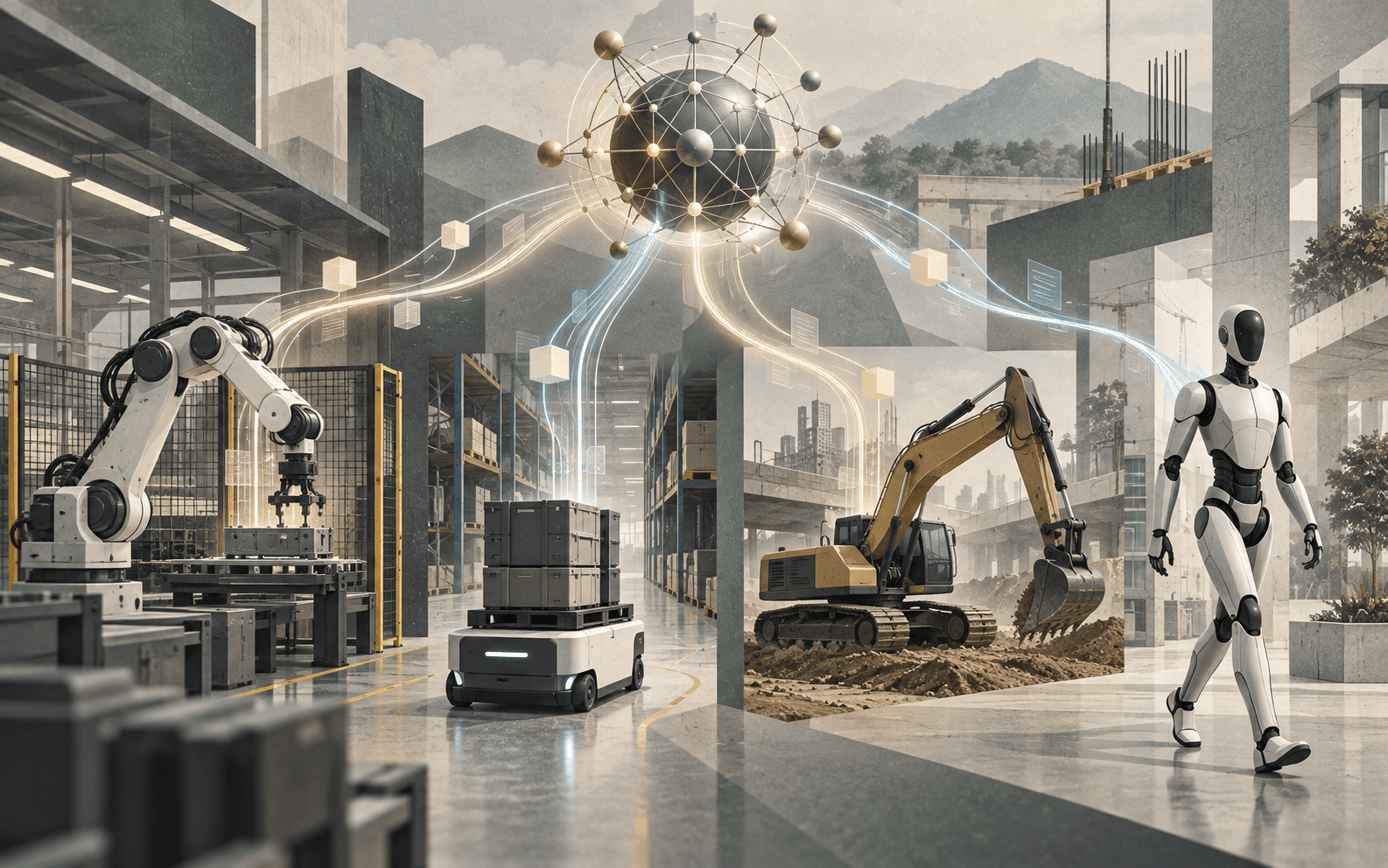
Physical AI companies need a different kind of investor. A software company can often test a product with a small team and cloud credits. A robotics company may need actuators, sensors, edge computers, safety engineering, manufacturing partners, field technicians, customer sites, and enough time to turn a laboratory demonstration into dependable work.
That difference changes the funding question. The best investor is not necessarily the firm with the largest fund or the most famous name. It is the investor that understands technical risk, supports hardware development, helps secure real operating environments, and can continue funding a company through manufacturing and deployment.
This report identifies 15 venture capital firms and investment funds with meaningful focus on robotics, embodied AI, autonomy, industrial automation, or the infrastructure behind intelligent machines. It is written for two audiences: founders searching for physical AI investors and capital allocators researching how to invest in the category through a venture fund.
The list is an editorial assessment, not a ranking of investment returns. Private fund performance, fee terms, current fundraising status, minimum commitments, and portfolio valuations are not consistently public. Inclusion reflects strategy, portfolio evidence, operating capability, category history, and relevance to physical AI as of September 10, 2026.
Physical AI infrastructure market map
See the companies building the compute, simulation, perception, robotics software, and deployment layers these investors are funding.
How generalist robot policies are developing
Explore one of the frontier technology categories attracting capital from Lux and other major venture firms.
Executive View
Eclipse Capital is the strongest overall choice because its physical industries mandate, capital base, company building model, and portfolio operate at unusual scale. Cybernetix Ventures is the purest robotics specialist. SOSV through HAX has the deepest practical infrastructure for turning early hardware into a manufacturable product. Playground Global, DCVC, Momenta, Construct Capital, HCVC, F Prime, and Lux add different combinations of technical judgment, industrial networks, and follow on capacity.
Toyota Ventures, the Amazon Industrial Innovation Fund, and GS Futures are strategic investors. Their corporate connections can create access to operating environments and customers, but founders must consider commercial alignment and strategic constraints. Physical Fund and JMoon Ventures are newer category specialists. Their explicit focus makes them relevant, while their shorter disclosed histories require more diligence from founders and prospective limited partners.
The 15 Physical AI Investors at a Glance
1. Eclipse Capital
Primary fit
Physical industries, robotics, autonomy, manufacturing
Typical stage
Formation through growth
Why it stands out
The clearest scaled investment platform built around modernizing the physical economy.
2. Cybernetix Ventures
Primary fit
Robotics, automation, and industrial AI
Typical stage
Pre seed through Series A
Why it stands out
A specialist team from the robotics community with a concentrated category mandate.
3. SOSV through HAX
Primary fit
Hardware, robotics, industrial systems, and physical AI
Typical stage
Pre seed and seed with follow on support
Why it stands out
Laboratories, machine shops, engineers, sourcing support, and a large hardware portfolio.
4. Playground Global
Primary fit
Frontier computing, robotics, autonomy, and advanced manufacturing
Typical stage
Early stage
Why it stands out
A strong record of backing foundational robotics and autonomy companies before product maturity.
5. DCVC
Primary fit
Deep technology applied to physical industries
Typical stage
Early through growth
Why it stands out
Long duration support for companies such as Agility Robotics and a broad industrial technology portfolio.
6. Momenta
Primary fit
Industrial AI, robotics, edge intelligence, and connected operations
Typical stage
Venture and early growth
Why it stands out
Fifteen years of industrial investing combined with corporate operating relationships.
7. Construct Capital
Primary fit
Manufacturing, logistics, defense, energy, and industrial technology
Typical stage
Early stage
Why it stands out
Commercial knowledge in foundational industries where physical AI must deliver measurable results.
8. HCVC
Primary fit
Hard technology that automates and digitizes the physical world
Typical stage
Formation through Series A
Why it stands out
A dedicated hard technology fund supported by the Hardware Club community.
9. F Prime Capital and Eight Roads
Primary fit
Robotics across logistics, agriculture, mobility, and healthcare
Typical stage
Early through growth
Why it stands out
A global robotics portfolio supported by unusually detailed sector research.
10. Lux Capital
Primary fit
Frontier science, robotics, autonomy, defense, and advanced systems
Typical stage
Early through growth
Why it stands out
Category shaping investments and enough capital to support technically ambitious companies.
11. Toyota Ventures
Primary fit
Robotics, mobility, autonomy, edge systems, and advanced manufacturing
Typical stage
Early stage
Why it stands out
Strategic knowledge and potential access to a global industrial and mobility organization.
12. Amazon Industrial Innovation Fund
Primary fit
Warehouse robotics, fulfillment, logistics, worker safety, and sensing
Typical stage
Early stage through established companies
Why it stands out
A one billion dollar strategic program connected to one of the largest logistics operations in the world.
13. GS Futures Collective Fund
Primary fit
Physical AI, robotics, construction, energy, and industrial infrastructure
Typical stage
Early stage
Why it stands out
A route to strategic validation and commercial relationships across the GS Group ecosystem.
14. Physical Fund
Primary fit
Automation, robotics, and early physical AI
Typical stage
Early stage
Why it stands out
One of the most explicit category native mandates, with a small disclosed portfolio.
15. JMoon Ventures
Primary fit
Robotics, humanoids, edge AI, intelligent devices, wearables, and spatial computing
Typical stage
Seed
Why it stands out
A focused physical AI thesis designed around North American operating companies.
| Investor | Primary fit | Typical stage | Why it stands out |
|---|---|---|---|
| 1. Eclipse Capital | Physical industries, robotics, autonomy, manufacturing | Formation through growth | The clearest scaled investment platform built around modernizing the physical economy. |
| 2. Cybernetix Ventures | Robotics, automation, and industrial AI | Pre seed through Series A | A specialist team from the robotics community with a concentrated category mandate. |
| 3. SOSV through HAX | Hardware, robotics, industrial systems, and physical AI | Pre seed and seed with follow on support | Laboratories, machine shops, engineers, sourcing support, and a large hardware portfolio. |
| 4. Playground Global | Frontier computing, robotics, autonomy, and advanced manufacturing | Early stage | A strong record of backing foundational robotics and autonomy companies before product maturity. |
| 5. DCVC | Deep technology applied to physical industries | Early through growth | Long duration support for companies such as Agility Robotics and a broad industrial technology portfolio. |
| 6. Momenta | Industrial AI, robotics, edge intelligence, and connected operations | Venture and early growth | Fifteen years of industrial investing combined with corporate operating relationships. |
| 7. Construct Capital | Manufacturing, logistics, defense, energy, and industrial technology | Early stage | Commercial knowledge in foundational industries where physical AI must deliver measurable results. |
| 8. HCVC | Hard technology that automates and digitizes the physical world | Formation through Series A | A dedicated hard technology fund supported by the Hardware Club community. |
| 9. F Prime Capital and Eight Roads | Robotics across logistics, agriculture, mobility, and healthcare | Early through growth | A global robotics portfolio supported by unusually detailed sector research. |
| 10. Lux Capital | Frontier science, robotics, autonomy, defense, and advanced systems | Early through growth | Category shaping investments and enough capital to support technically ambitious companies. |
| 11. Toyota Ventures | Robotics, mobility, autonomy, edge systems, and advanced manufacturing | Early stage | Strategic knowledge and potential access to a global industrial and mobility organization. |
| 12. Amazon Industrial Innovation Fund | Warehouse robotics, fulfillment, logistics, worker safety, and sensing | Early stage through established companies | A one billion dollar strategic program connected to one of the largest logistics operations in the world. |
| 13. GS Futures Collective Fund | Physical AI, robotics, construction, energy, and industrial infrastructure | Early stage | A route to strategic validation and commercial relationships across the GS Group ecosystem. |
| 14. Physical Fund | Automation, robotics, and early physical AI | Early stage | One of the most explicit category native mandates, with a small disclosed portfolio. |
| 15. JMoon Ventures | Robotics, humanoids, edge AI, intelligent devices, wearables, and spatial computing | Seed | A focused physical AI thesis designed around North American operating companies. |
Stages are based on public descriptions and may change. Founders should verify geography, check size, lead preference, reserves, conflicts, and current investment activity directly with each firm.
Black Scarab Weekly
Follow the physical AI economy
Get Black Scarab news, deep research, and practical analysis in one clear Thursday briefing.
How Black Scarab Selected the Top 15
There is no standardized league table for physical AI venture capital. The term itself can include robot foundation models, autonomous vehicles, industrial control, perception, simulation, edge computing, connected machines, and vertical robots. A credible list therefore needs more than a count of investments containing the word AI.
Black Scarab considered six factors. The first was mandate intensity: how central physical systems are to the investor's stated strategy. The second was portfolio evidence across more than one company. The third was technical and operating experience. The fourth was the ability to help with manufacturing, customer validation, or field deployment. The fifth was capital and follow on capacity. The sixth was evidence that the strategy existed before the latest surge of interest.
Fund size alone did not determine inclusion. A small specialist can be more useful to a pre seed robotics founder than a large generalist. The assessment also avoids treating an investment in one celebrated humanoid company as proof of broad physical AI expertise.
What Top Means in This Report
Category commitment
Evidence considered
Mandate, dedicated team, research, and repeated investments
Why it matters
Reduces the risk that physical AI is a temporary theme inside a general portfolio.
Portfolio depth
Evidence considered
Relevant companies across robotics, autonomy, industrial systems, and enabling infrastructure
Why it matters
Shows that the investor can distinguish different business models and technical layers.
Technical judgment
Evidence considered
Partners, engineers, laboratories, operating history, and diligence capability
Why it matters
Physical products create engineering risks that software pattern matching can miss.
Commercial access
Evidence considered
Industrial partners, design customers, deployment sites, and market relationships
Why it matters
Robotics companies need places to test, sell, service, and improve their systems.
Capital continuity
Evidence considered
Fund scale, reserves, growth vehicles, and syndication network
Why it matters
Manufacturing and field deployment often require more capital and time than a software launch.
Evidence over time
Evidence considered
Older investments, follow on participation, exits, and repeat funds
Why it matters
A sustained strategy is more meaningful than recent marketing language.
| Criterion | Evidence considered | Why it matters |
|---|---|---|
| Category commitment | Mandate, dedicated team, research, and repeated investments | Reduces the risk that physical AI is a temporary theme inside a general portfolio. |
| Portfolio depth | Relevant companies across robotics, autonomy, industrial systems, and enabling infrastructure | Shows that the investor can distinguish different business models and technical layers. |
| Technical judgment | Partners, engineers, laboratories, operating history, and diligence capability | Physical products create engineering risks that software pattern matching can miss. |
| Commercial access | Industrial partners, design customers, deployment sites, and market relationships | Robotics companies need places to test, sell, service, and improve their systems. |
| Capital continuity | Fund scale, reserves, growth vehicles, and syndication network | Manufacturing and field deployment often require more capital and time than a software launch. |
| Evidence over time | Older investments, follow on participation, exits, and repeat funds | A sustained strategy is more meaningful than recent marketing language. |
1. Eclipse Capital
Eclipse has built its identity around the modernization of physical industries. In April 2026, the firm announced 1.3 billion dollars across Fund VI and Early Growth Fund III. That structure gives Eclipse the ability to form companies, lead early rounds, and continue supporting businesses as factories, fleets, and customer deployments expand.
Its current portfolio includes Wayve, Bedrock Robotics, Mytra, Genesis AI, Anduril, Simbe, Bright Machines, VulcanForms, and Foxglove. The common thread is not one robot form. It is the use of software, data, autonomy, and advanced hardware to improve transportation, manufacturing, logistics, construction, defense, and other physical industries.
Leadership to know: Eclipse was founded by Lior Susan, whose path included agriculture, military service, the telecommunications startup Intucell, and the digital transformation team at Flex. Partners Greg Reichow and Charly Mwangi bring manufacturing experience from Tesla and Rivian, giving the investment team direct exposure to the difficulty of scaling complex physical products.
For founders, Eclipse is most compelling when the company addresses a large physical market and needs help with product, manufacturing, go to market execution, or company formation. For prospective limited partners, Eclipse offers one of the most concentrated institutional scale expressions of the physical industries thesis. Access, minimum commitments, and availability must be obtained directly from the firm.
2. Cybernetix Ventures
Cybernetix describes itself as a firm created by robotics leaders for robotics innovators. Its investment strategy covers robotics, automation, and industrial AI at pre seed, seed, and Series A across manufacturing, logistics, construction, healthcare, agriculture, climate, autonomy, sensors, edge computing, and robotics infrastructure.
The firm reported 23 investments from its first fund and announced that it was raising a 100 million dollar second fund in June 2025. Its disclosed companies include Verve Motion, Cambrian Robotics, Rugged Robotics, Raise Robotics, KEWAZO, and other systems that perform or enable physical work.
Leadership to know: General Partners Fady Saad and Mark Martin combine robotics ecosystem and industrial operating experience. Saad co founded MassRobotics after an earlier career at Nokia Siemens Networks. Martin previously led the Industrial Automation, Sensors, and Internet of Things division at Analog Devices, where he ran a business with more than one billion dollars in revenue.
Cybernetix is a natural first call for an early robotics founder who wants an investor fluent in integration, suppliers, customers, and later stage robotics capital. The smaller fund scale can create check size limits, but specialization may produce more relevant help. Prospective limited partners should confirm whether Fund II reached a final close and request current portfolio, ownership, reserve, fee, and performance information.
3. SOSV Through HAX
HAX is SOSV's hard technology program and one of the most operationally distinctive investors on this list. HAX says it has supported 440 startups with more than 225 million dollars invested by SOSV into HAX companies. Its Newark facility includes laboratories, industrial equipment, machine shops, engineering staff, and resources intended to move a company from technical concept to prototype and customer evidence.
The current model combines an initial investment of up to 550,000 dollars with a residency and practical support in design, engineering, sourcing, manufacturing, fundraising, and business development. Relevant companies include Neptune Robotics, Simbe Robotics, Avidbots, Opentrons, Swap Robotics, Danu Robotics, and Rightbot.
Leadership to know: HAX is led by SOSV General Partners Duncan Turner and Avra van der Zee. Van der Zee previously served as chief operating officer of Elemental Impact and as chief operating officer and general counsel of JUMP, where she helped guide the hardware company through its acquisition by Uber.
HAX is best suited to very early teams that still need to resolve core hardware, manufacturing, or product risks. It is broader than physical AI and also invests in energy, materials, diagnostics, and other hard technologies. That breadth does not weaken its relevance, but founders should confirm that their system fits the current program. Investors generally access HAX exposure through SOSV funds rather than a separate retail product.
4. Playground Global
Playground Global invests in companies solving difficult scientific and technical problems, often before a product has been completed. Its portfolio includes Agility Robotics, Skydio, Robust AI, Fabric, Boxbot, Relativity Space, Velo3D, and other businesses across robotics, autonomous systems, computing, and advanced manufacturing.
The quality of that portfolio is the main reason for Playground's position. Agility is developing a commercial humanoid for logistics. Skydio builds autonomous aerial systems. Robust AI and Boxbot address warehouse work. Relativity created an automated rocket manufacturing system. Together they show repeated interest in machines that perceive, decide, and act, along with the compute and production systems around them.
Leadership to know: General Partner Bruce Leak is a founding partner whose investment focus includes automation and robotics. His operating background spans Apple, the development of QuickTime, and the founding of WebTV. He now serves on boards that include Agility Robotics and Fabric. Playground's general partner group also includes Peter Barrett, Jory Bell, and former Intel and VMware chief executive Pat Gelsinger.
Playground is a strong match for deeply technical founders building a platform or category defining system rather than a thin application. It is not a dedicated physical AI fund, so a founder must still fit the broader frontier technology strategy. Investors seeking pure physical AI exposure should understand that their capital would also reach areas such as advanced computing and life sciences.
5. DCVC
DCVC invests in deep technology addressing climate, health, defense, space, and the operations of physically intensive industries. Its company portfolio includes Agility Robotics, AIM Intelligent Machines, Blue River Technology, Fulfil, Recycleye, Slip Robotics, and other businesses that connect advanced computation to machinery and industrial work.
Its support of Agility is especially relevant. DCVC says it co led an early investment in 2020 and invested in every subsequent round. That history demonstrates the patience required to move a complex robot through engineering, factory construction, customer pilots, and commercial deployment.
Leadership to know: DCVC is led by co founders and managing partners Matthew Ocko and Zachary Bogue. Ocko's current work spans manufacturing, robotics, applied AI, and defense. Operating Partner Alan Cohen adds experience as a serial entrepreneur and former enterprise technology executive who helps portfolio companies with product strategy, market entry, and exits.
DCVC is a good fit for founders whose advantage depends on hard scientific or engineering insight and whose market extends beyond a single robot feature. It is a broad deep technology investor, not a pure robotics vehicle. Limited partners should evaluate how much of the relevant fund is expected to reach physical AI and advanced manufacturing rather than assume the entire portfolio represents the category.
6. Momenta
Momenta focuses on the point where digital intelligence meets industrial execution. The firm reports 15 years of industrial investment activity, five funds, more than 70 portfolio companies, and 22 exits. Its stated physical AI scope includes industrial AI, robotics, edge intelligence, connected infrastructure, adaptive control, and software defined operations.
The portfolio includes Agtonomy, AICA, NODE Robotics, Luffy AI, Litmus, HighByte, Overview AI, and other companies spanning autonomous agriculture, robotic operations, force control, industrial data, and machine intelligence. Corporate relationships with organizations such as Rockwell Automation, Advantech, NS Solutions, and Semtech can support industrial validation and distribution.
Leadership to know: General Partner Ken Forster founded Momenta after a career building connected products, services, and businesses at large companies and his own startups. General Partner Sandra Mueller brings industrial market strategy and business development experience, while Partner Stephen Berard contributes architecture experience across cloud, edge, and industrial AI systems.
Momenta is most relevant to founders that already understand the operational problem and need to move from pilot projects to repeatable industrial adoption. It may be less suited to a speculative general purpose robot without a defined buyer. For strategic and institutional investors, Momenta offers a more explicit industrial technology exposure than many generalist venture firms, but fund specific composition and availability still require direct diligence.
7. Construct Capital
Construct Capital invests in founders rebuilding the foundational industries of the economy. Its stated markets include manufacturing, logistics, defense, and energy. Relevant portfolio companies include Chef Robotics, Hadrian, Verve Motion, Kinetic, Podium Automation, and businesses developing industrial production and supply chain systems.
Construct's advantage is commercial context. Physical AI succeeds when it solves a costly constraint inside a factory, warehouse, maintenance operation, or supply chain. The investor therefore needs to understand deployment cycles, integration, labor, throughput, procurement, and customer return, not only model capability.
Leadership to know: Construct was co founded by Managing Partners Dayna Grayson and Rachel Holt. Grayson developed an early industrial investment practice at NEA and backed companies including Desktop Metal, Onshape, and Formlabs. Holt was an early Uber employee and senior executive who led its United States and Canada rides business, incubator, and new mobility operations.
The firm is a strong match for early stage founders with a clearly defined industrial customer and a credible path from first deployment to a larger operating platform. It is not a robotics only fund. Prospective limited partners should view it as exposure to the modernization of foundational industries, with physical AI as an important mechanism inside a broader thesis.
8. HCVC
HCVC is an early stage fund dedicated to hard technology. The firm says its investment thesis is to back companies that automate and digitize the physical world, beginning as early as company formation and continuing through Series A. It also operates Hardware Club, a selective global founder and operating community.
Its portfolio includes Automata, Gideon, Cosmic Robotics, Augmenta, Caper AI, Anello Photonics, and other companies combining hardware, software, sensing, and automation. Several disclosed exits provide evidence that the strategy predates the current physical AI label.
Leadership to know: Alexis Houssou founded HCVC in 2015 and remains its managing partner. General Partner Jerry Yang previously co founded a semiconductor startup in Taiwan. General Partner Aymerik Renard brings more than 25 years of breakthrough technology investing experience, including earlier work at Innovacom.
HCVC is attractive for early founders who need patient capital for research and development cycles and want a community familiar with hardware constraints. The portfolio is broader than robotics, so founders should connect their company to the firm's automation and technical defensibility thesis. Investors should request current fund size, reserves, portfolio allocation, and realized results because the public site does not provide a complete fund level picture.
9. F Prime Capital and Eight Roads
F Prime and affiliated Eight Roads funds have developed a global view of robotics across agriculture, logistics, mobility, healthcare, and industrial work. Their disclosed examples include Burro, Teleo, RightHand Robotics, Unbox Robotics, Pony.ai, Inceptio, EACON, Precision Robotics, Sensyn Robotics, and WHILL. The firms also publish a recurring State of Robotics report.
The research capability matters. The 2025 report mapped more than 1,500 robotics companies, giving the team a broad comparison set for business models, applications, stages, and financing conditions. That does not prove superior returns, but it demonstrates sustained category work and a portfolio that reaches beyond one geography or robot type.
Leadership to know: F Prime's physical and enterprise AI work is led by Venture Partner Sanjay Aggarwal, a mechanical engineer who previously built machine automation systems and served as a technology company chief executive. Principal Betsy Mulé focuses on early stage enterprise technology and robotics investments. Together they author the firm's recurring State of Robotics research.
Founders should approach the relevant F Prime or Eight Roads team based on geography, stage, and sector. Prospective limited partners should recognize that these are diversified technology and healthcare investment platforms. Robotics can be a meaningful specialization without representing the majority of a fund.
10. Lux Capital
Lux Capital backs ambitious science and technology companies across a wide set of markets. The firm reports about 7 billion dollars under management and has invested in Physical Intelligence, Anduril, Applied Intuition, Auris Health, and other companies spanning robot foundation models, autonomous defense systems, vehicle intelligence, and medical robotics.
The portfolio record includes a notable robotics outcome in Auris Health, which Johnson and Johnson acquired in 2019 in a transaction valued at up to 6.1 billion dollars. More recently, Lux backed Physical Intelligence, a company developing general purpose robot policies.
Leadership to know: Lux was co founded by Peter Hebert and Josh Wolfe. Hebert helps lead the firm and has backed companies across automation, robotics, defense, and infrastructure. Partner Brandon Reeves works across AI, defense, and manufacturing and previously supported Tesla as a field applications engineer at Texas Instruments. Reeves and Partner Lan Jiang are identified with Lux's investment in Physical Intelligence.
Lux belongs on this list because of influence, technical ambition, and follow on capacity, not because physical AI is its exclusive mandate. It is a suitable partner for founders attempting a major scientific or engineering leap. Limited partners seeking concentrated robotics exposure should ask how the specific Lux vehicle allocates capital across its much broader frontier technology universe.
11. Toyota Ventures
Toyota Ventures is Toyota's early stage venture capital arm. Its current mandate and portfolio cover artificial intelligence, robotics, mobility, next generation computing, aerospace, materials, energy, and advanced manufacturing. Relevant companies include Pickle Robot, Walden Robotics, Intuition Robotics, Realtime Robotics, May Mobility, Burro, Boxbot, Agtonomy, and Parallel Systems.
The strategic attraction is obvious. Toyota operates complex global manufacturing and mobility businesses and understands safety, production, supply chains, quality systems, and long product cycles. A relationship can give a founder useful technical context and possible commercial connections, although an investment does not guarantee a pilot, procurement contract, or Toyota deployment.
Leadership to know: Jim Adler founded Toyota Ventures and serves as its general partner. He previously led data and business development at Toyota Research Institute, held senior data product roles, founded the secure voting company VoteHere, and began his career as a rocket engineer at Lockheed Martin.
Toyota Ventures is best suited to early stage companies that align with mobility, manufacturing, robotics, materials, or related frontier technology themes. It is a corporate venture investor rather than an independent venture fund that outside investors can normally enter as limited partners. Founders should also understand information rights, strategic expectations, and potential conflicts with other industrial partners.
12. Amazon Industrial Innovation Fund
Amazon launched the one billion dollar Industrial Innovation Fund to invest in fulfillment, logistics, supply chain, robotics, artificial intelligence, autonomy, sensing, and worker safety. The program considers companies from early stage startups through more established businesses.
Its portfolio includes Agility Robotics, Archetype AI, Contoro, dyna Robotics, Filics, BionicHIVE, Mantis Robotics, Vimaan, and other companies developing robots, perception systems, industrial communications, and safety technology.
Leadership to know: The fund is led by Franziska Bossart, who joined Amazon with more than 20 years of experience in corporate venture capital and digital transformation. Her prior investment work included industrial automation, robotics, and climate technology across North America, Europe, and Asia.
For a startup addressing warehouse or logistics work, few investors can match Amazon's view of operating scale. That strategic value requires discipline. An investment is not evidence that Amazon will become a customer, and dependence on one potential commercial relationship can weaken a startup. The fund is financed by Amazon and is not a conventional venture vehicle available to outside limited partners.
13. GS Futures Collective Fund
GS Futures describes its Collective Fund as an early stage vehicle investing globally across physical AI and robotics, energy and industrial transition, and digital platforms and infrastructure. Its physical AI scope includes embodied intelligence, autonomy, sensing, and systems intended for the real economy.
The broader GS Futures portfolio includes August Robotics, Amesa, Config, AiFi, Azul 3D, and other companies in robotics, construction, industrial AI, computer vision, and advanced manufacturing. GS Group relationships can create routes to validation and adoption across construction and industrial markets.
The fund is relevant for early companies with a deployable product and a credible path from pilot to production. It is not exclusively physical AI, and the portfolio also includes software, energy, biotechnology, and digital infrastructure. Prospective investors should request the allocation policy, ownership targets, reserves, governance, and current fundraising status for the exact vehicle under consideration.
14. Physical Fund
Physical Fund is one of the clearest examples of a category native investor. Its public mandate is to invest in early stage physical AI and support founders working in automation and robotics. Its disclosed portfolio includes Primate Intelligence, Anaco, Gatlin Robotics, Axomind, Operatic, and Acorn Genetics.
The attraction for founders is focus. A specialist that spends most of its time on intelligent machines should understand the difference between a model demonstration, a reliable robot, and a scalable business. The public record remains limited, however. The site does not disclose a complete fund size, check range, reserve policy, realized track record, or detailed case studies.
Leadership to know: Physical Fund was founded by Nima Ashraf, a mechanical engineer whose operating background includes MakerBot, autonomous vehicle developer Zoox, and commercial kitchen automation company Miso Robotics. That experience gives the emerging fund direct exposure to product engineering and the realities of deploying robots.
Physical Fund belongs on the list as an emerging specialist rather than an established scale leader. Founders should verify current investment pace, lead behavior, portfolio support, and conflicts. Prospective limited partners should perform full manager diligence and avoid treating a precise category label as a substitute for fund history, terms, references, and portfolio evidence.
15. JMoon Ventures
JMoon Ventures describes itself as an early stage venture firm leading seed investments in physical AI companies operating in the United States or Canada. Its stated focus includes robotics, humanoids, edge AI, connected devices, haptic wearables, and spatial computing across agriculture, retail, healthcare, logistics, energy, construction, manufacturing, and other physical markets.
JMoon emphasizes product need, technical defensibility, customer growth, team capability, capital efficiency, and access to operating partners. That combination is relevant to young hardware companies that need help protecting their technical advantage while establishing a commercial path.
Leadership to know: Managing Partner Jasmeet Singh has invested since 2011 across humanoids, social robots, smart home systems, three dimensional printing, digital twins, wearables, AI chips, drones, and other intelligent hardware categories. JMoon presents that range as the experience behind its physical AI focus.
Like Physical Fund, JMoon is included as a category specialist with a shorter disclosed institutional record than the leaders at the top of the list. Its public portfolio is limited. Founders and potential limited partners should independently verify active capital, check size, ownership targets, references, follow on capacity, portfolio details, and fund terms before drawing conclusions from the stated strategy.
Which Physical AI Investor Fits Your Startup
A founder should not send the same pitch to all 15 firms. The right investor depends on stage, geography, technical risk, customer, capital intensity, and the help needed before the next round. A robot foundation model, a warehouse unloading system, an industrial sensor, and an autonomous construction platform may all qualify as physical AI, but their capital and deployment paths are different.
Very early teams still resolving core engineering and manufacturing questions should study HAX, HCVC, Cybernetix, Physical Fund, and JMoon. Companies with a defined industrial application and early customer evidence may fit Cybernetix, Momenta, Construct, Toyota Ventures, Amazon, or GS Futures. Large platform companies needing continued capital should study Eclipse, DCVC, Playground, Lux, and the appropriate F Prime or Eight Roads team.
Strategic capital should solve a strategic problem. A corporate investor can offer operating expertise, validation, and customer access. It can also introduce channel conflicts, information concerns, or pressure to prioritize one partner. Founders should negotiate from a clear view of what the relationship must achieve beyond the financing itself.
Founder Shortlist by Need
Prototype, engineering, and manufacturing support
Investors to study first
HAX, HCVC, Cybernetix
Key question
Can the investor materially reduce the next technical and manufacturing risk?
Robotics specialist at pre seed or seed
Investors to study first
Cybernetix, Physical Fund, JMoon
Key question
Does the firm lead rounds, and what ownership and evidence does it expect?
Industrial pilot and commercial scale
Investors to study first
Momenta, Construct, GS Futures, Toyota Ventures, Amazon
Key question
Can the relationship produce a representative customer deployment without creating dependence?
General purpose robotics or autonomy platform
Investors to study first
Eclipse, Playground, DCVC, Lux
Key question
Can the investor support a long technical schedule and several large follow on rounds?
Global robotics market and later stage network
Investors to study first
F Prime and Eight Roads, Eclipse, DCVC, Lux
Key question
Which office, partner, and vehicle actually owns the category mandate?
Warehouse and logistics automation
Investors to study first
Amazon, Eclipse, Cybernetix, Playground, Construct
Key question
Does the investor understand integration, throughput, service, and customer return?
| Founder need | Investors to study first | Key question |
|---|---|---|
| Prototype, engineering, and manufacturing support | HAX, HCVC, Cybernetix | Can the investor materially reduce the next technical and manufacturing risk? |
| Robotics specialist at pre seed or seed | Cybernetix, Physical Fund, JMoon | Does the firm lead rounds, and what ownership and evidence does it expect? |
| Industrial pilot and commercial scale | Momenta, Construct, GS Futures, Toyota Ventures, Amazon | Can the relationship produce a representative customer deployment without creating dependence? |
| General purpose robotics or autonomy platform | Eclipse, Playground, DCVC, Lux | Can the investor support a long technical schedule and several large follow on rounds? |
| Global robotics market and later stage network | F Prime and Eight Roads, Eclipse, DCVC, Lux | Which office, partner, and vehicle actually owns the category mandate? |
| Warehouse and logistics automation | Amazon, Eclipse, Cybernetix, Playground, Construct | Does the investor understand integration, throughput, service, and customer return? |
This table is a research starting point, not an introduction, endorsement, or confirmation that a firm is currently investing.
What Physical AI Investors Want to See
A cinematic demonstration can earn attention, but it rarely completes venture diligence. Investors need evidence that the system can become a company. The strongest pitch connects technical performance to a costly customer problem and explains how each round of capital removes a measurable risk.
For physical AI, a useful evidence package covers the operating task, customer economics, autonomy boundary, intervention, reliability, safety, manufacturing cost, service burden, data advantage, and capital plan. Founders should state what is autonomous, what is teleoperated, what is scripted, and what still depends on engineering staff.
Evidence for a Physical AI Funding Process
Customer problem
Useful evidence
A costly, frequent, and clearly owned operating constraint
Weak substitute
A large market estimate without a specific buyer or budget
Technical capability
Useful evidence
Repeatable task results across representative conditions
Weak substitute
One edited demonstration in a controlled environment
Autonomy
Useful evidence
Intervention rate, failure modes, recovery, and defined operating envelope
Weak substitute
A broad claim that the system is autonomous
Economics
Useful evidence
Cost per accepted unit of work and a path to customer return
Weak substitute
Labor replacement claims based only on hourly wages
Manufacturing
Useful evidence
Bill of materials, suppliers, yields, quality plan, and scaling milestones
Weak substitute
A target unit cost without supplier or process evidence
Deployment
Useful evidence
Installation, integration, safety, training, service, and support plan
Weak substitute
An assumption that customers will operate the prototype as delivered
Data advantage
Useful evidence
Rights, collection loop, labeling, improvement, and protection
Weak substitute
A claim that more robots automatically create a data moat
Capital plan
Useful evidence
Milestones tied to technical, commercial, and manufacturing risk
Weak substitute
A funding request based mainly on competitor valuations
| Area | Useful evidence | Weak substitute |
|---|---|---|
| Customer problem | A costly, frequent, and clearly owned operating constraint | A large market estimate without a specific buyer or budget |
| Technical capability | Repeatable task results across representative conditions | One edited demonstration in a controlled environment |
| Autonomy | Intervention rate, failure modes, recovery, and defined operating envelope | A broad claim that the system is autonomous |
| Economics | Cost per accepted unit of work and a path to customer return | Labor replacement claims based only on hourly wages |
| Manufacturing | Bill of materials, suppliers, yields, quality plan, and scaling milestones | A target unit cost without supplier or process evidence |
| Deployment | Installation, integration, safety, training, service, and support plan | An assumption that customers will operate the prototype as delivered |
| Data advantage | Rights, collection loop, labeling, improvement, and protection | A claim that more robots automatically create a data moat |
| Capital plan | Milestones tied to technical, commercial, and manufacturing risk | A funding request based mainly on competitor valuations |
How Investors Can Access Physical AI Through Venture Funds
A prospective limited partner should begin by separating venture access from public market exposure. Eclipse, SOSV, DCVC, Lux, Momenta, HCVC, and other independent firms raise private funds under securities rules and typically work with institutions, family offices, strategic corporations, and qualifying private investors. A website profile does not establish that a vehicle is accepting commitments or that a particular investor is eligible.
The central diligence question is concentration. A respected deep technology manager may own excellent robotics companies while allocating only a modest share of its fund to physical AI. Investors seeking targeted exposure should request the fund mandate, portfolio construction limits, current and planned allocation, check sizes, reserves, ownership targets, valuation policy, realized and unrealized results, fees, key person terms, and examples of operating support.
Corporate funds such as Toyota Ventures and the Amazon Industrial Innovation Fund are not outside venture funds available for limited partner commitments. They belong in this report because founders compete for their capital and strategic support, not because an outside investor can subscribe to them.
Public vehicles provide a different route. Robocap invests in listed robotics, automation, and AI companies. RoboStrategy describes itself as a publicly listed investment company combining private and public robotics exposure. WisdomTree's WDRN fund invests in listed companies connected to physical AI, humanoids, and drones. These vehicles have different liquidity, valuation, concentration, fee, and regulatory characteristics from a venture fund commitment.
This report is educational and does not recommend an investment or assess suitability. Venture capital can involve long lockups, limited liquidity, uncertain valuations, high company failure rates, capital calls, fees, and loss of principal. Public thematic funds can also be volatile and may hold companies whose revenue exposure to physical AI is indirect.
Three Routes to Physical AI Exposure
Private venture fund
What the investor owns
A limited partner interest in a portfolio of private companies
Potential advantage
Early access and professional selection across startup stages
Main limitation
Eligibility, long lockup, limited transparency, manager risk, and uncertain valuations
Public robotics or physical AI fund
What the investor owns
Shares in a listed fund or investment company
Potential advantage
Easier access, market pricing, and potential liquidity
Main limitation
Public holdings may provide indirect exposure and can trade with thematic volatility
Direct startup investment
What the investor owns
Equity or a convertible security in one private company
Potential advantage
Concentrated ownership and direct diligence
Main limitation
Very high company specific risk, limited access, and no portfolio diversification
| Route | What the investor owns | Potential advantage | Main limitation |
|---|---|---|---|
| Private venture fund | A limited partner interest in a portfolio of private companies | Early access and professional selection across startup stages | Eligibility, long lockup, limited transparency, manager risk, and uncertain valuations |
| Public robotics or physical AI fund | Shares in a listed fund or investment company | Easier access, market pricing, and potential liquidity | Public holdings may provide indirect exposure and can trade with thematic volatility |
| Direct startup investment | Equity or a convertible security in one private company | Concentrated ownership and direct diligence | Very high company specific risk, limited access, and no portfolio diversification |
Questions a Prospective Limited Partner Should Ask
The word physical can hide very different portfolios. One manager may invest in robot foundation models and humanoids. Another may focus on industrial software, sensing, semiconductors, or autonomous vehicles. Both can be credible, but they produce different technical, capital, regulatory, and exit risks.
A limited partner should determine whether the team has earned an advantage in sourcing, technical diligence, company building, industrial access, follow on financing, and exits. It is also important to distinguish evidence generated by the current team and fund from experience earned at a previous employer.
Limited Partner Diligence Checklist
Mandate
Question to answer
What percentage of the fund can and is expected to be invested in physical AI?
Definition
Question to answer
Which layers qualify, and which software, semiconductor, defense, mobility, or industrial investments sit outside the intended exposure?
Team
Question to answer
Who performs technical diligence, supports manufacturing, and helps portfolio companies reach customers?
Portfolio construction
Question to answer
How many companies, what initial ownership, what check size, and how much is reserved for follow on rounds?
Capital intensity
Question to answer
How does the manager underwrite companies that may require factories, inventory, field service, or repeated hardware generations?
Valuation
Question to answer
How are private positions valued, and how sensitive is reported performance to the largest unrealized holdings?
Track record
Question to answer
Which outcomes are realized, which remain unrealized, and which belong to the current team and strategy?
Conflicts
Question to answer
How are competing portfolio companies, strategic investors, corporate relationships, and opportunity allocation handled?
Terms
Question to answer
What are the fees, carry, preferred return if any, recycling, key person provisions, fund life, extensions, and reporting rights?
Access
Question to answer
Is the vehicle currently accepting commitments, who is eligible, and what is the minimum commitment?
| Topic | Question to answer |
|---|---|
| Mandate | What percentage of the fund can and is expected to be invested in physical AI? |
| Definition | Which layers qualify, and which software, semiconductor, defense, mobility, or industrial investments sit outside the intended exposure? |
| Team | Who performs technical diligence, supports manufacturing, and helps portfolio companies reach customers? |
| Portfolio construction | How many companies, what initial ownership, what check size, and how much is reserved for follow on rounds? |
| Capital intensity | How does the manager underwrite companies that may require factories, inventory, field service, or repeated hardware generations? |
| Valuation | How are private positions valued, and how sensitive is reported performance to the largest unrealized holdings? |
| Track record | Which outcomes are realized, which remain unrealized, and which belong to the current team and strategy? |
| Conflicts | How are competing portfolio companies, strategic investors, corporate relationships, and opportunity allocation handled? |
| Terms | What are the fees, carry, preferred return if any, recycling, key person provisions, fund life, extensions, and reporting rights? |
| Access | Is the vehicle currently accepting commitments, who is eligible, and what is the minimum commitment? |
Frequently Asked Questions
Which venture capital firms invest in physical AI startups? Eclipse, Cybernetix, HAX, Playground, DCVC, Momenta, Construct, HCVC, F Prime, Lux, Toyota Ventures, Amazon's Industrial Innovation Fund, GS Futures, Physical Fund, and JMoon are strong firms to research. The right shortlist depends on stage, geography, application, capital requirement, and strategic fit.
What should a robotics startup look for in an investor? Look for evidence of hardware diligence, manufacturing knowledge, customer access, follow on capacity, realistic timelines, and experience supporting field deployment. Brand recognition matters less than the partner and fund that will actually work with the company.
Can individuals invest in a physical AI venture fund? Sometimes, but private venture funds generally limit participation under applicable securities rules and may require substantial minimum commitments. Eligibility and availability must be confirmed with the manager. Public thematic funds are easier to access but are not equivalent to owning a private venture portfolio.
Are robotics ETFs the same as physical AI venture funds? No. An exchange traded fund usually owns listed securities and offers market liquidity. A venture fund owns private company interests, calls capital over time, reports periodic valuations, and can lock capital for many years.
Is the largest venture firm always the best investor for a physical AI company? No. Large firms can provide follow on capital and network reach. Small specialists can provide more attention, sharper technical judgment, and better category relationships. The best fit depends on the risk the next financing must remove.
Black Scarab Verdict
Physical AI venture investing is separating into three groups. Scaled physical industry platforms such as Eclipse can support companies through several stages. Specialist firms such as Cybernetix and HAX can help founders solve technical and manufacturing problems early. Strategic investors such as Toyota, Amazon, and GS Futures can connect technology to operating environments where performance becomes commercial evidence.
No single firm is the best choice for every company or every limited partner. Founders should choose the investor that improves the probability of reaching the next technical and commercial milestone. Capital allocators should choose a manager only after determining how much of the fund will actually reach physical AI and whether the team has an advantage beyond the popularity of the theme.
Eclipse ranks first in this assessment because it combines focus, capital, portfolio quality, company formation, and growth support. Cybernetix offers the purest robotics specialization. HAX offers the strongest physical product development environment. The remaining firms earn their places through portfolio evidence, industrial expertise, strategic access, or a category native mandate worth watching.
The market will change quickly. The durable leaders will be the investors whose companies move from demonstrations to safe, reliable, economically useful work in factories, warehouses, farms, construction sites, hospitals, vehicles, and infrastructure. That is where physical AI stops being a funding category and becomes an operating economy.
Research Method and Limitations
Black Scarab reviewed firm websites, portfolio pages, fund announcements, company disclosures, and independent reporting available through September 10, 2026. Firm supplied descriptions are treated as company claims. Portfolio inclusion and announced fund size do not establish investment performance, current ownership, commercial success, or fund availability.
Private fund returns, detailed portfolio valuations, ownership, fee arrangements, limited partner composition, and current fundraising status are often confidential. The ordering is therefore a qualitative editorial assessment of relevance and capability, not a quantitative performance ranking. Readers should verify all information directly with the manager before using it for a financing or investment decision.
About the author
Rodolfo is the founder of Black Scarab, where he covers the technologies and commercial signals shaping physical AI adoption.
Meet RodolfoBlack Scarab Weekly
Follow the physical AI economy
Get Black Scarab news, deep research, and practical analysis in one clear Thursday briefing.
Related Insights
Industrial Robotics
Top Robotic Welding Systems in 2026: Eight Options Compared
Compare eight robotic welding systems for fabrication, repeat production and pipework, with public pricing, an interactive payback calculator and a look at adaptive AI and humanoids.
Read related insight
Robotics
How to Build a Robot With NVIDIA
From a virtual warehouse to onboard inference, a practical guide to the tools, data, and engineering decisions behind a working humanoid.
Read related insight
Physical AI Infrastructure
Encord Deep Dive: Founders, Funding and the Robot Data Market
From image labeling to robot data services, Encord is building a business around the experience machines need to learn useful work.
Read related insight