
Guide · Cross-Industry
Google Coral Edge TPU: Why the USB Accelerator and Dev Board Still Matter in 2026
A practical guide to Google Coral and the Edge TPU, covering low-power inference, TensorFlow Lite quantization, the Coral USB Accelerator, Dev Board, M.2 modules, and the real-world edge AI deployments where Coral still stands out.
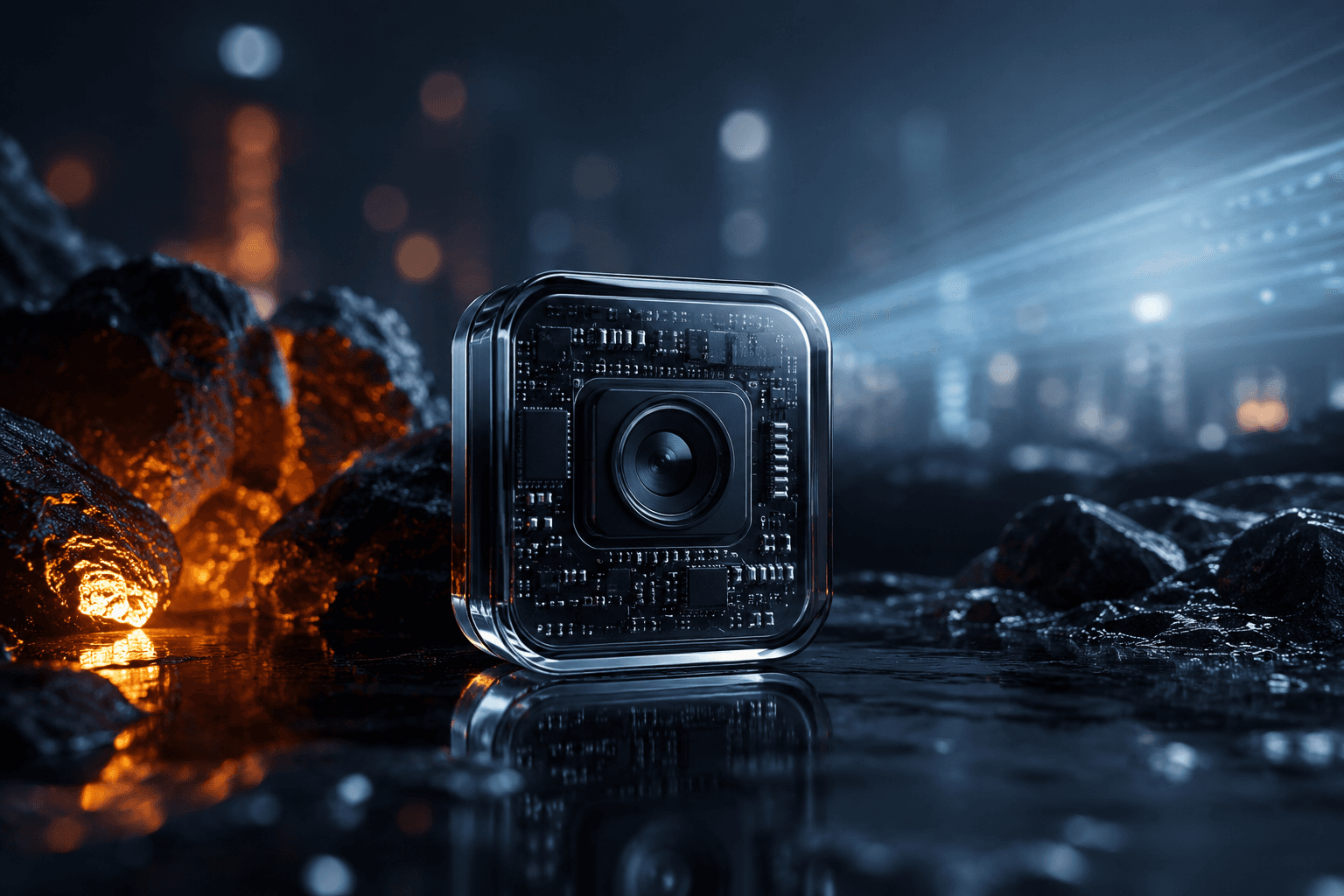
While the industry often chases raw compute, Google's Coral platform, powered by the Edge TPU, has always been about a different metric: performance per watt. It is designed for edge AI deployments where power is limited, heat is a constraint, and always-on inference matters more than chasing the largest headline number.
That is what makes Coral important. Instead of trying to compete with high-power industrial AI modules on absolute horsepower, Google Coral focuses on efficient local inference through compact hardware such as the Coral USB Accelerator, M.2 modules, and Coral Dev Board family.
This article belongs to the Edge AI Roadmap series. Read it beside Raspberry Pi 5 + Hailo-8, Arduino Nicla Vision, Edge Impulse's embedded AI deployment layer, and Hailo's edge AI acceleration layer to compare efficient edge inference, microcontroller AI, model deployment workflows, and newer low-power accelerator paths.
1. The Architecture of Efficiency
The Edge TPU is not a general-purpose processor. It is a domain-specific ASIC built to accelerate the kinds of linear algebra operations that sit at the core of modern neural networks.
The 2-Watt Profile: Coral hardware is known for delivering about 4 TOPS of inference performance while using roughly 2 watts of power, which is why it remains so attractive for constrained edge deployments.
Form Factor Versatility: Whether you use the Coral USB Accelerator for a simple prototype, an M.2 Accelerator in an embedded system, or a Coral Dev Board for an integrated build, the same Edge TPU deployment philosophy carries across the platform.
Black Scarab Weekly
Get the next Black Scarab deep dive
Keep reading now, then get every new deep dive and news report in Thursday's briefing.
2. Deep Dive: The Art of Post-Training Quantization
The real secret behind Coral's efficiency is also its biggest constraint: the Edge TPU is built around 8-bit quantized TensorFlow Lite models. To use Coral well, you have to understand quantization.
Shrinking the Model: Moving from FP32 representations down to 8-bit integers dramatically reduces model size and memory bandwidth requirements, which is one reason Coral can stay fast without needing a large thermal envelope.
Maintaining Accuracy: The tradeoff is quantization noise, but for many vision workloads the accuracy loss can be small when calibration is done carefully and the model is prepared correctly.
The Workflow: In practice, developers train a model, convert it to TensorFlow Lite, and then compile it specifically for the Edge TPU so the hardware can execute it efficiently.
3. Practical Applications: From Industry to the Wild
Coral's low-power, low-latency profile makes it a strong fit for specialized deployments where fanless hardware, energy efficiency, and local decision-making matter more than raw scale.
High-Speed Sorting Lines: Coral can support defect detection or visual sorting tasks on fast-moving industrial lines where milliseconds matter and a full industrial GPU box would be excessive.
Battery-Powered Wildlife Monitoring: The platform is well suited to remote sensing applications where a device wakes, identifies whether something important is in frame, stores the event, and returns to a low-power state.
Precision Agriculture: Coral is attractive in low-power agricultural robotics and field monitoring systems where local vision inference can help distinguish crops from weeds or track plant conditions without depending on the cloud.
4. The Future: Ubiquity and Privacy
Coral's long-term relevance is tied to a broader trend toward ultra-edge intelligence, where inference happens as close to the sensor as possible to reduce bandwidth, preserve privacy, and improve resilience.
Assistive Wearables and Smart Cameras: Because the hardware stays relatively efficient and compact, Coral remains attractive for wearable, camera, and embedded vision systems that cannot tolerate large thermal loads.
Event-Driven Systems: In decentralized camera networks or remote monitoring systems, local inference can reduce the need to stream raw video continuously and instead transmit only events that matter.
Summary: The Verdict
Google Coral is not trying to beat larger AI platforms on raw horsepower. It wins by being efficient, predictable, and deployable in places where heat, bandwidth, and power budgets are real constraints.
That is why Coral still matters in 2026. For edge AI teams building low-power computer vision systems with TensorFlow Lite and INT8 models, the Edge TPU remains one of the clearest examples of how specialized hardware can outperform more general-purpose designs in the environments that matter most.
Sourcing & Verification
This guide was compiled using Coral's official Edge TPU compiler, model compatibility, and inference documentation along with official Coral hardware references for the USB Accelerator, M.2 Accelerator, and Dev Board platform.
Black Scarab Weekly
Catch up on physical AI in one email
Every new Black Scarab deep dive and news report, collected into one clear Thursday briefing.
Related Insights
Cross-Industry
The Best Way to Source GPU Compute in 2026
Compute Exchange Deep Dive: How its marketplace helps organizations source reserved GPU capacity and future commitments, and how it compares with hyperscalers, specialist GPU clouds, and direct deals.
Read related insight
Cross-Industry
Ouster Deep Dive: Digital LiDAR, Spatial Perception, and the 3D Sensing Layer of Physical AI
A business and investor deep dive on Ouster, the digital LiDAR company building 3D sensing hardware and software for autonomy, robotics, smart infrastructure, mapping, security, warehouses, ports, and industrial intelligence.
Read related insight
Cross-Industry
Hailo Deep Dive: Edge AI Acceleration, Low-Power Inference, and the Physical AI Compute Layer
A business and investor deep dive on Hailo, the edge AI processor company behind Hailo-8, Hailo-8L, Hailo-10H, Hailo-15, and the Hailo AI Software Suite, showing why efficient local inference is becoming a core deployment layer for physical AI.
Read related insight
Next Step
Explore a commercial opportunity in Mexico
If you are exploring how a physical AI technology could fit the Mexican market, Black Scarab can help assess the opportunity, map relevant stakeholders, and define a credible commercial next step.