
Ultra's $62 million raise puts the robot service model in focus
Ultra combines warehouse robots, a recurring service business and models from Physical Intelligence. Its latest financing puts capital behind a practical approach to automation: start with a useful job, then improve the system through deployment.
At a glance
- The $62 million total combines a reported $50 million Series A and an earlier $12 million seed round.
- Ultra pairs warehouse packing robots with models from Physical Intelligence in an existing collaboration.
- The service model connects installation, continuing support and learning from deployed machines.
What happened
Ultra has reported $62 million raised across two rounds while deepening its existing relationship with Physical Intelligence, bringing fresh attention to its warehouse robot service business.
The total includes a $50 million Series A led by Framework Ventures, with Y Combinator participating, and an earlier $12 million seed round led by Y Combinator and NextView Ventures, according to Dealroom's account of the announcement. Fortune published the news on October 9.
The company sits at the intersection of two ambitions in robotics. One is to develop models that can learn useful physical skills across different tasks. The other is to turn those skills into something a customer can rely on during an ordinary working day. Ultra's approach connects the two at a warehouse workstation.
That makes the relationship with Physical Intelligence as interesting as the financing. Ultra supplies the robot, the installation and the operating environment. Physical Intelligence contributes models that help the machine act. The commercial proposition depends on how well those pieces work together, including the people who recover an interrupted task.
A warehouse job first
Ultra is the Brooklyn company at ultra.tech, founded in 2024 and listed by Y Combinator as an active Summer 2024 startup. Its CEO is Jon Miller Schwartz. The current product, Operator, is a stationary robot on locking casters that the company markets for packing, sorting and kitting.
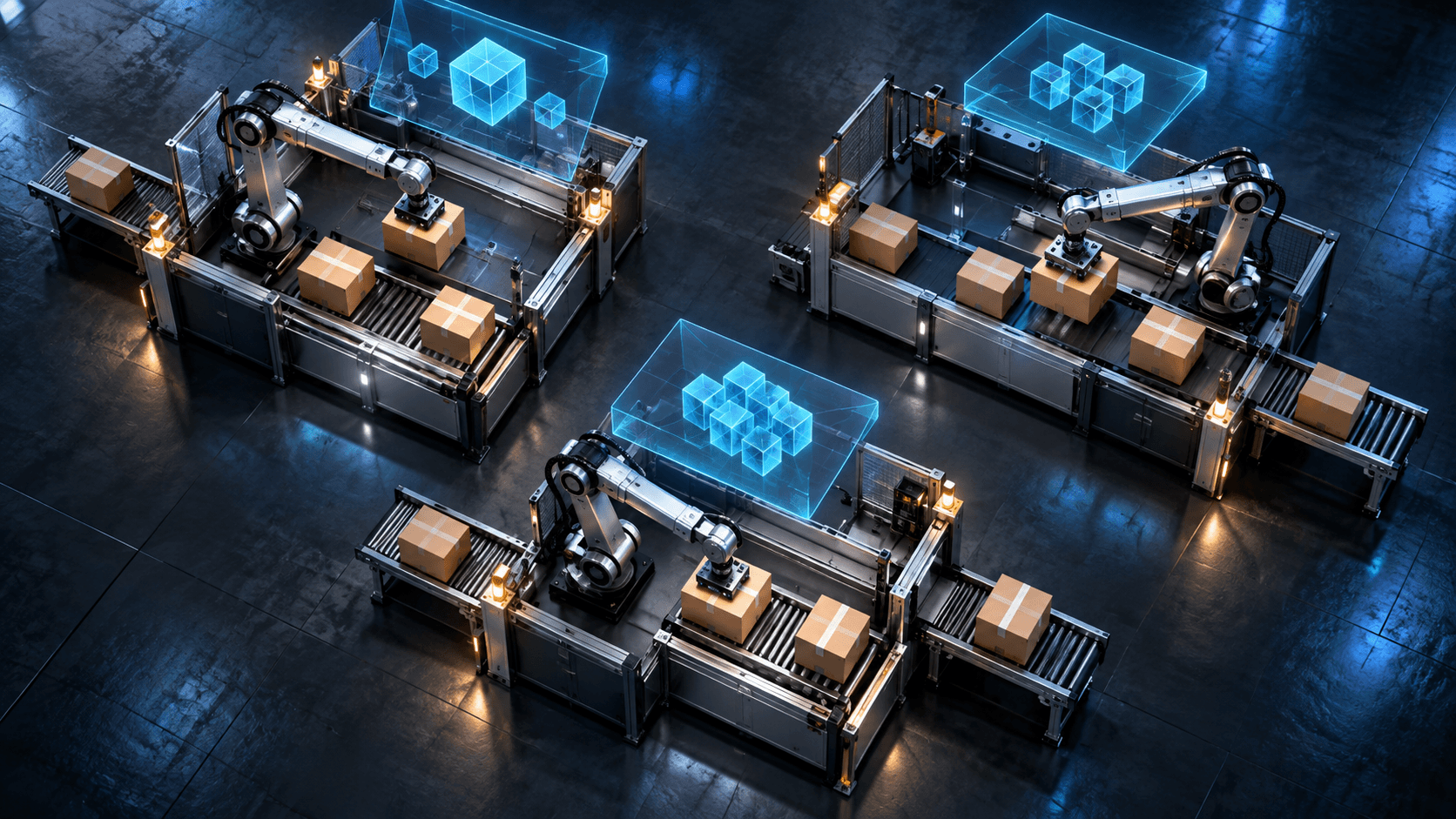
The form is revealing. A packing station calls for a robot that can reach products, handle packaging and coordinate a sequence of actions in a defined space. Ultra has designed around that setting. Its published requirements include a standard power outlet and an Ethernet connection, while its pitch emphasizes fitting into existing operations.
This is a useful lens through which to read the wider robotics market. The sophistication of a machine matters, but so does the amount of work required to give it a useful place in a business. A robot that performs a bounded job can have a commercial role well before it can move freely through every part of a warehouse.
Packing also presents a meaningful challenge for learning systems. Products vary, packaging bends and an item can arrive in a different orientation from the last one. A model that can accommodate those differences could reduce the amount of individual programming a deployment needs. The surrounding workstation still has to present materials in a way the machine can handle.
Ultra's website describes live customer warehouse installations. These are company presented deployments, but they give the proposition a concrete setting: existing workstations and actual orders. The question moves from whether a robot can demonstrate a skill to whether the complete system can keep doing useful work alongside the rest of the operation.
Black Scarab Weekly
Follow the physical AI economy
Get Black Scarab news, deep research, and practical analysis in one clear Thursday briefing.
An intelligence layer shared across robots
The Physical Intelligence relationship was already public before this funding announcement. In a February 24 article, the research company included an Ultra authored account of warehouse deployments using successive generations of its π models. The account described improvements as the models developed and as Ultra's operating data entered training.
The same article included Weave Robotics, whose application is folding laundry. Packing orders and folding clothes are different commercial tasks, yet both appear within Physical Intelligence's attempt to build a reusable layer of robot intelligence. That is the broader industry idea behind Ultra's partnership: a deployment company may be able to draw on capabilities developed beyond its own machines and customer sites.
If that approach works, it could change where robotics companies concentrate their effort. A team can spend more time on hardware, workflow design, installation and customer support while drawing on a specialist model developer for part of the control system. The boundaries will vary by application, and the robot company still has to make the combined product work.
There is a reciprocal benefit. Real deployments expose models to situations that a carefully arranged demonstration may miss. Ultra's February account describes human intervention when a model struggles, with those interventions producing data for later training. Operating the service and improving the model become connected activities.
Human assistance deserves a place in that picture. Recovering a difficult task can keep an early deployment useful and help identify what the model needs to learn next. Its value depends on the time and expertise required, and on whether the system becomes easier to support as experience accumulates.
Better models can broaden what a robot handles, but a warehouse remains a physical system. Grippers, packaging, equipment layout and the movement of goods all influence the result. Progress in the intelligence layer has to translate into improvements at the workstation.
Selling reliable work
Dealroom describes Ultra's arrangement as an installation fee followed by a monthly charge for hardware and software support. That gives the financing a clear commercial context. Ultra is building a service around equipment that has to remain useful after it arrives at the customer's site.
For a warehouse, a recurring contract can reduce the initial commitment involved in adopting a robot. It also gives the supplier a continuing responsibility for the system. The customer is paying for automation within an operating business, where missed orders, maintenance and interruptions have consequences beyond the machine itself.
For Ultra, the model ties growth to more than software adoption. Each installation brings hardware, setup and continuing support. Financing can help a robot service company carry those costs while payments arrive over time. A larger installed base then has to be supported without making every additional customer equally difficult to serve.
This is where the partnership and the business model meet. Useful model improvements could make a robot handle more of a customer's normal work and reduce the frequency of interventions. That would benefit both the warehouse and the company responsible for maintaining the service. The improvement has to show up in daily operations for the arrangement to become more attractive.
There is also a limit to what one workstation can change. Products still need to reach the robot, completed orders need to leave it and staff need a workable way to manage exceptions. A successful installation becomes part of a coordinated process. Its value depends on the throughput and quality of that process as a whole.
From installation to repeat business
The financing supports a focused version of the robotics opportunity. Ultra is combining a machine for a recognizable warehouse task with an external model partner and a continuing service relationship. That structure gives customers a way to adopt automation while giving the supplier repeated exposure to the work its robots need to learn.
The next stage will be most visible in repeat installations, expansion at existing customers and systems that become easier to operate over time. Those developments would show that experience at one workstation is becoming useful at the next, rather than every deployment requiring the same amount of effort again.
Ultra's announcement fits a broader shift in how robot progress can be assessed. More capable models create possibilities. Deployment turns those possibilities into a working product. The durable business will come from making the whole service dependable enough that customers keep using it.
Sources and further reading
- Ultra: original funding announcement, October 9, 2026
- Ultra, official Operator product and deployment page. Undated; accessed October 9, 2026.
- Y Combinator, Ultra company profile. Undated; accessed October 9, 2026.
- Physical Intelligence, The Physical Intelligence Layer. Published February 24, 2026; accessed October 9, 2026. Ultra and Weave sections are partner authored.
- Dealroom, Ultra financing summary. Accessed October 9, 2026. Secondary account linking to Fortune; publication timestamp not displayed in the retrieved result.
- Fortune, Jeff John Roberts, Ultra financing report. Published October 9, 2026, 6:33 a.m. Eastern time.

About the author
Rodolfo is the founder of Black Scarab, where he covers the technologies and commercial signals shaping physical AI adoption.
Meet Rodolfo