
Deep Dive · Manufacturing
Learn to See a Factory: What Every Room, Process, and Production Flow Actually Does
A practical tour of the modern manufacturing plant, from receiving and fabrication to assembly, quality, shipping, maintenance, and the production flows that connect them.
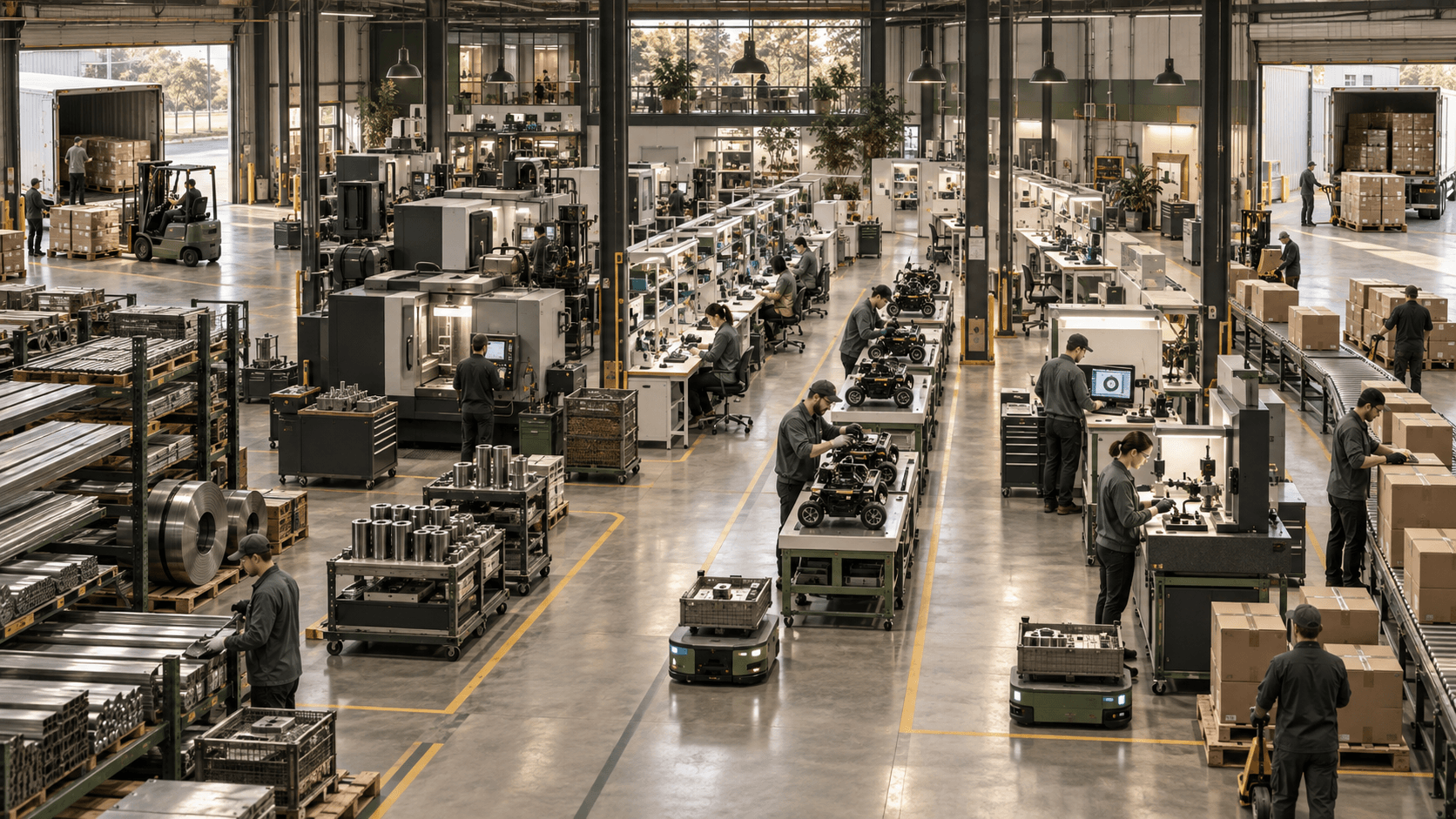
This is Part 1 of Inside the Physical AI Factory, Black Scarab's first principles learning series about how products, machines, people, software, suppliers, and intelligent systems come together in manufacturing.
A factory can look overwhelming on a first visit. Forklifts cross aisles. Machines cut metal behind closed doors. Parts wait on racks. Screens show schedules and alarms. Inspectors measure features that are almost invisible. Finished products somehow emerge at the other end. The activity makes sense once you learn to see the plant as a connected production system rather than a building filled with equipment.
The United States Census Bureau defines manufacturing as the mechanical, physical, or chemical transformation of materials, substances, or components into new products. Assembly can count as manufacturing too. That definition is broad because a plant can turn steel into a gearbox, ingredients into paint, electronic components into a control board, or purchased subassemblies into a complete robot.
This report gives you a map for reading any plant. We will separate the main manufacturing types, walk from the receiving dock to shipping, learn the measurements that reveal how production is performing, and follow a hypothetical autonomous inspection rover through three stages of growth. By the end, you should be able to enter an unfamiliar factory and ask useful questions before anyone mentions artificial intelligence.
The Factory in One Sentence
Materials, components, information, labor, energy, and capital
Transformation
A controlled sequence of making, moving, joining, testing, and recording
Acceptable Output
The required product, produced safely at the intended quality, rate, cost, and delivery time
| Input | Transformation | Acceptable Output |
|---|---|---|
| Materials, components, information, labor, energy, and capital | A controlled sequence of making, moving, joining, testing, and recording | The required product, produced safely at the intended quality, rate, cost, and delivery time |
Two Questions Classify Most Manufacturing Systems
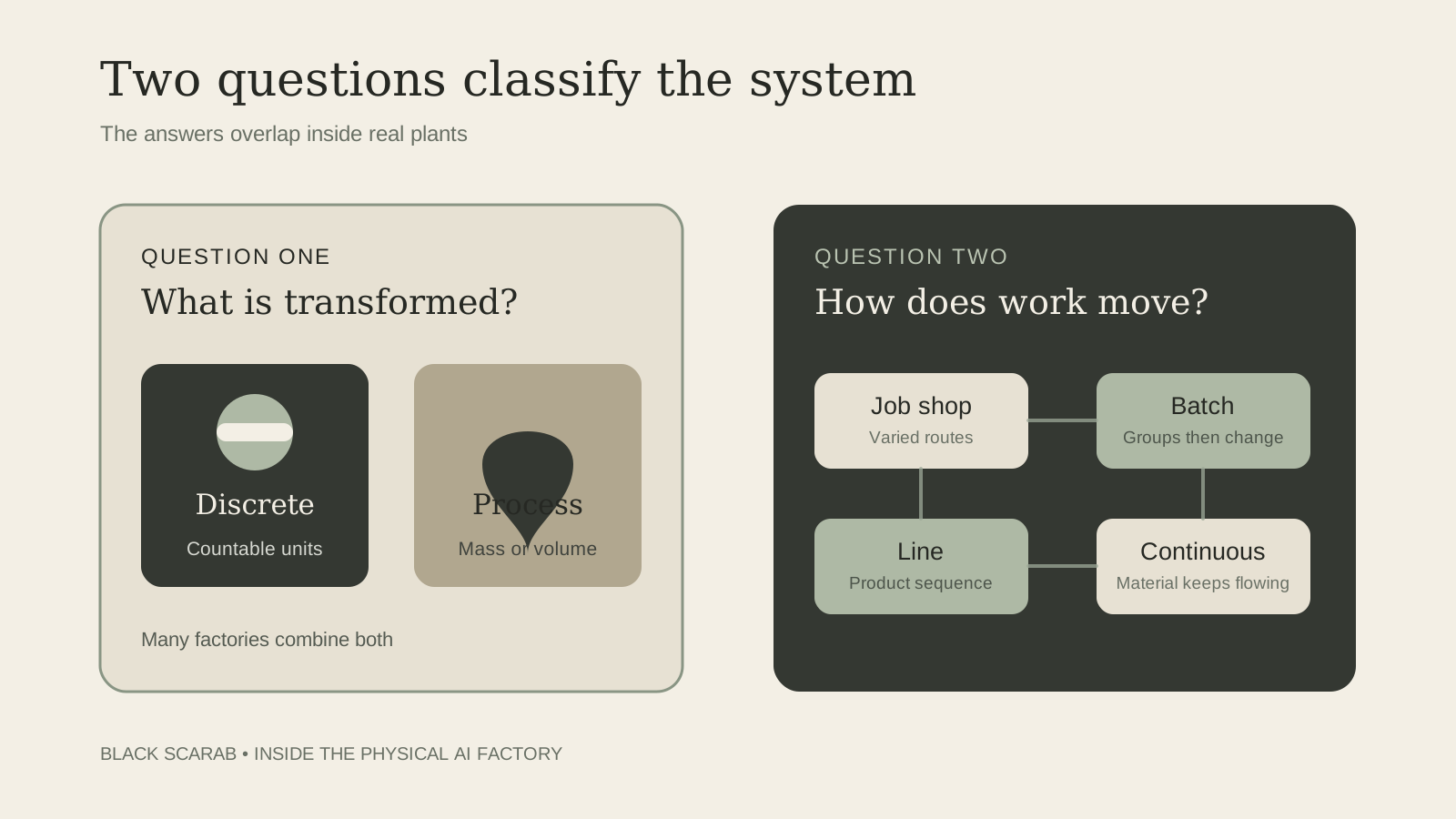
Manufacturing language becomes confusing when different categories are treated as competing answers to one question. They are not. Discrete and process manufacturing describe the nature of the product and transformation. Job shop, batch, line, and continuous production describe how work moves through the system. A plant can therefore be both discrete and batch, or process and continuous.
Discrete manufacturing produces countable items such as motors, trucks, circuit boards, and inspection rovers. Individual units can usually be identified, assembled from a bill of materials, and taken apart to some degree. Process manufacturing transforms ingredients through mixing, heating, reacting, separating, or another physical or chemical action. Its output is often measured by mass or volume, and reversing the transformation may be impractical.
Real plants often combine both. A beverage facility may run a process that mixes liquid in a vessel, then use discrete equipment to fill, cap, label, pack, and palletize bottles. A rover factory may machine housings, apply coatings and adhesives, assemble countable components, load software, and calibrate sensors. The categories are tools for understanding the work, not rigid labels for the entire building.
Question One: What Is Being Transformed?
Discrete manufacturing
Typical Output
Countable units or components
Useful Clue
A unit normally has a part number, serial number, or bill of materials
Examples
Robots, appliances, vehicles, circuit boards, and machined parts
Process manufacturing
Typical Output
Material measured by mass, volume, or formula
Useful Clue
Ingredients are mixed, reacted, heated, refined, or otherwise transformed
Examples
Chemicals, coatings, food, beverages, pharmaceuticals, and fuels
| System | Typical Output | Useful Clue | Examples |
|---|---|---|---|
| Discrete manufacturing | Countable units or components | A unit normally has a part number, serial number, or bill of materials | Robots, appliances, vehicles, circuit boards, and machined parts |
| Process manufacturing | Material measured by mass, volume, or formula | Ingredients are mixed, reacted, heated, refined, or otherwise transformed | Chemicals, coatings, food, beverages, pharmaceuticals, and fuels |
Black Scarab Weekly
Get the next Black Scarab deep dive
Keep reading now, then get every new deep dive and news report in Thursday's briefing.
Four Ways Work Can Move
A job shop handles high variety and relatively low volume. Equipment is commonly grouped by capability, so one area contains mills, another contains lathes, and another contains inspection equipment. Each order follows the route it needs. Skilled people, flexible machines, scheduling, and clear travelers matter because the mix changes constantly.
Batch production makes a defined quantity, then changes over to another product or version. A bakery may prepare one recipe before cleaning and preparing another. An electronics line may assemble one board revision before loading different feeders and programs. Batch size trades changeover effort against inventory, responsiveness, and the risk of making too much before a problem is discovered.
Line production arranges work in product sequence. A unit advances from one operation to the next, ideally at a balanced rate. This can simplify flow and support high output, but one unreliable or slow station can restrict the whole line. Standard work, material presentation, quality at the source, and rapid recovery become central disciplines.
Continuous production keeps material flowing through a process over long operating periods. Refining, chemicals, paper, and some food operations fit this model. Stable control, equipment reliability, utilities, and safe shutdown procedures are critical because a disturbance can affect material already distributed throughout the process and restarting can take substantial time.
The National Institute of Standards and Technology describes flexible multi job systems in which different job types share the same operation sequence but require different processing times. That detail matters. A plant can look balanced when it makes one product mix and develop a new bottleneck when the mix changes. Capacity belongs to a specific product mix and operating condition, not to the building in the abstract.
Question Two: How Does Work Flow?
Job shop
Best Fit
Customized work with varied routes
Main Strength
Flexibility
Main Management Challenge
Scheduling, travel, setup, and dependence on skill
Batch
Best Fit
Families of products made in groups
Main Strength
Shared equipment with planned variety
Main Management Challenge
Changeovers, inventory, traceability, and batch quality
Line
Best Fit
Repeatable products with stable demand
Main Strength
Clear sequence and high output
Main Management Challenge
Balance, reliability, and rapid problem response
Continuous
Best Fit
Material that should keep moving through a process
Main Strength
Stable high volume operation
Main Management Challenge
Process control, utilities, reliability, and safe shutdown
| Flow | Best Fit | Main Strength | Main Management Challenge |
|---|---|---|---|
| Job shop | Customized work with varied routes | Flexibility | Scheduling, travel, setup, and dependence on skill |
| Batch | Families of products made in groups | Shared equipment with planned variety | Changeovers, inventory, traceability, and batch quality |
| Line | Repeatable products with stable demand | Clear sequence and high output | Balance, reliability, and rapid problem response |
| Continuous | Material that should keep moving through a process | Stable high volume operation | Process control, utilities, reliability, and safe shutdown |
These flows can coexist in one plant. A rover business might use a job shop for prototype brackets, batch production for circuit boards, and a short line for final assembly.
The Guided Factory Tour Begins at Receiving
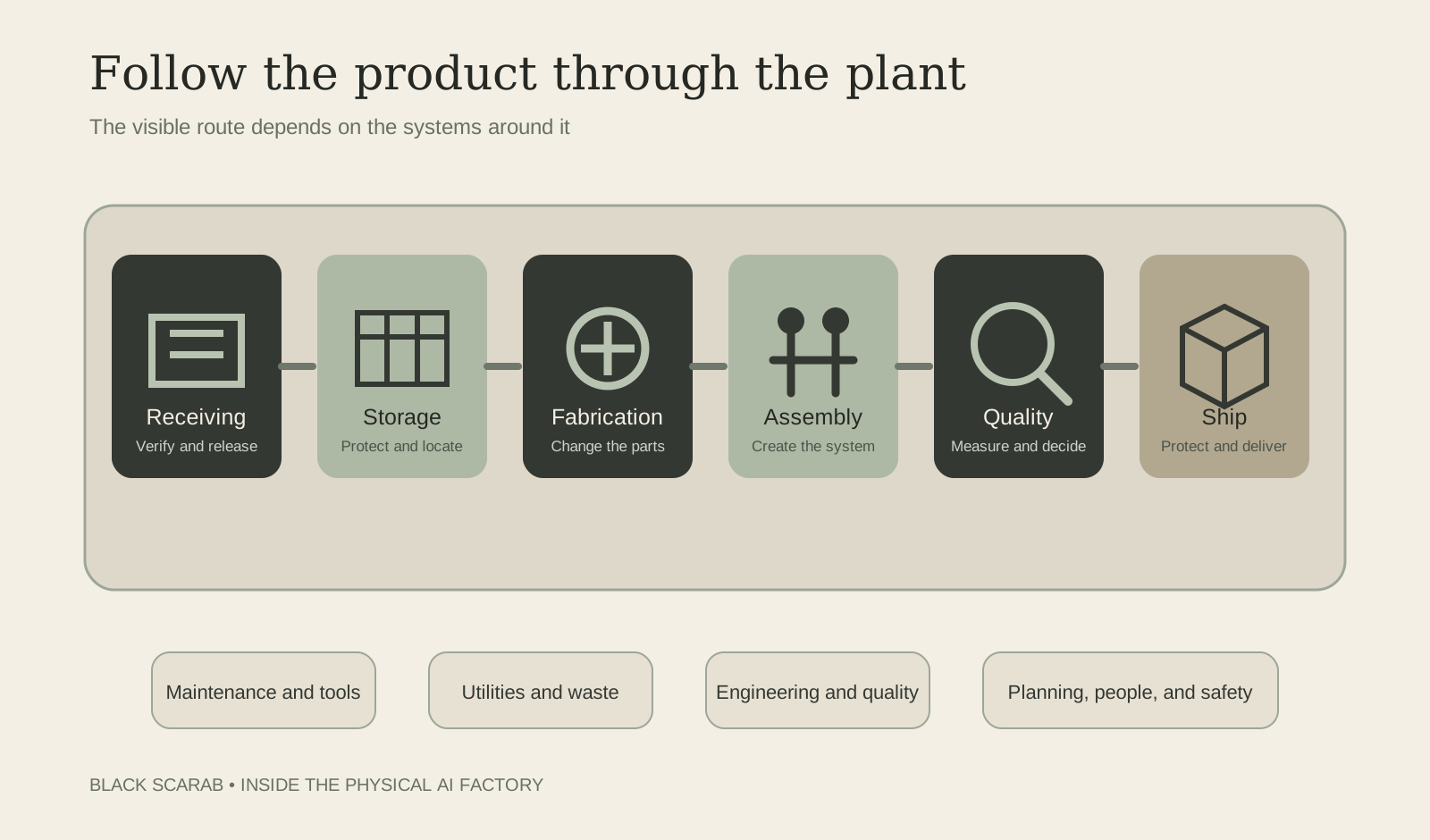
Production begins before a machine runs. At receiving, workers compare deliveries with purchase orders, inspect packaging, count items, record lots or serial numbers, and decide whether material can enter usable inventory. Some items go directly to storage. Others wait in a controlled area until inspection, documentation, or test results release them.
This boundary protects the factory. A damaged camera, incorrect alloy, expired adhesive, or unapproved battery cell can create failures much later when the source is harder to find. Traceability starts here. The plant needs to know what arrived, from whom, under which revision or lot, where it is stored, and which finished units eventually consumed it.
The dock is also a safety system. OSHA guidance for warehouses and loading docks emphasizes trailer movement, dock edges, powered industrial trucks, clear aisles, conveyors, and manual handling. Material flow cannot be considered efficient if it depends on unsafe crossings or workers lifting loads the process should handle mechanically.
Storage Is a Controlled Waiting System
Raw material storage holds metal stock, resin, chemicals, packaging, fasteners, electronics, and purchased components until production needs them. Each class may require different controls for temperature, humidity, fire risk, security, shelf life, electrostatic discharge, or lifting. The correct location is not merely an empty shelf. It is a place where the item can remain identifiable, protected, accessible, and properly rotated.
Inventory then moves toward production. A central warehouse can simplify control but create long travel. Storage near the point of use can shorten replenishment but spread inventory across many locations. Supermarkets, flow lanes, carts, kits, and timed delivery routes are common ways to present material to operators without surrounding every station with excess stock.
NIST manufacturing extension case studies repeatedly connect plant layout with travel distance, inventory placement, flow lanes, and material movement. The lesson is broader than any one facility. Every trip consumes time, equipment, aisle space, and attention. Movement is necessary, but movement alone does not make the product more valuable.
Fabrication Changes the Parts
Fabrication turns raw stock or purchased blanks into the shapes the product needs. Cutting removes material. Forming bends or presses it. Casting and molding create a shape inside a tool. Additive manufacturing builds a shape in layers. Welding, fastening, adhesives, and other joining processes combine pieces. Surface treatment can clean, harden, protect, or finish them.
The room around a process matters. Machining creates chips, heat, mist, noise, and used fluid. Welding creates light, fumes, heat, and fire risk. Painting and coating can require ventilation, environmental controls, and careful material handling. Electronics work may require clean benches and protection from electrostatic discharge. A floor plan must include extraction, utilities, access, maintenance clearance, waste handling, and safe separation, not only the machine footprint.
Our rover enclosure might begin as sheet metal cut and bent by a supplier, while wheel hubs and sensor mounts are machined in small batches. A molded polymer shell could reduce assembly work at higher volume, but it would require dedicated tooling and a stable design. The correct process changes with geometry, material, tolerances, volume, lead time, and available capital.
Machine Profile: A CNC Machining Center
What does it do?
Plain Language Answer
Removes material with programmed cutting tools.
What does it need?
Plain Language Answer
Power, foundation capacity, tooling, workholding, programs, coolant management, inspection, and skilled support.
What sets output?
Plain Language Answer
Cycle time, setup time, tool life, inspection, product mix, and machine availability.
What is easy to miss?
Plain Language Answer
Fixtures, cutters, probing, chip handling, programming, and quality control can be as important as the machine.
| Question | Plain Language Answer |
|---|---|
| What does it do? | Removes material with programmed cutting tools. |
| What does it need? | Power, foundation capacity, tooling, workholding, programs, coolant management, inspection, and skilled support. |
| What sets output? | Cycle time, setup time, tool life, inspection, product mix, and machine availability. |
| What is easy to miss? | Fixtures, cutters, probing, chip handling, programming, and quality control can be as important as the machine. |
Assembly Creates the Product System
Assembly combines fabricated parts, purchased components, wiring, electronics, software, and labels into a working product. A single bench may be enough for early units. Repeating demand can justify several stations, dedicated fixtures, powered tools, test equipment, material presentation, and a line that divides work into a controlled sequence.
The design determines much of this effort. A hidden fastener may be easy to draw and difficult to reach. Similar connectors can be reversed. A cable may be damaged by a sharp edge. Software may be loaded before the correct hardware revision is known. Design for assembly asks how the product can be built correctly, safely, and consistently, while mistake proofing makes an incorrect action difficult or immediately visible.
Robots become attractive when work is repetitive, measurable, and stable enough to engineer. The robot arm is only one component. A useful cell also needs a tool, fixtures, material presentation, controls, sensing, guarding or another validated safety approach, programming, and acceptance testing. Flexible manual assembly may remain the better choice while the rover design and demand are changing.
Machine Profile: An Industrial Robot Cell
What does it do?
Plain Language Answer
Moves a tool or part through a programmed task.
What does it need?
Plain Language Answer
A robot, controller, end tool, fixtures, material feed, safety system, programming, and integration.
What sets output?
Plain Language Answer
Complete cell cycle, part presentation, reliability, changeover, and recovery from faults.
What is easy to miss?
Plain Language Answer
The application around the arm often determines most of the value, cost, and risk.
| Question | Plain Language Answer |
|---|---|
| What does it do? | Moves a tool or part through a programmed task. |
| What does it need? | A robot, controller, end tool, fixtures, material feed, safety system, programming, and integration. |
| What sets output? | Complete cell cycle, part presentation, reliability, changeover, and recovery from faults. |
| What is easy to miss? | The application around the arm often determines most of the value, cost, and risk. |
Quality Is a Route Through the Plant
Quality is not a final room that sorts good products from bad ones. Requirements begin in the design. Suppliers must understand them. Processes must be capable of meeting them. Operators need clear instructions and measurement methods. Records must connect results with the relevant material, equipment, software, and product revision.
Incoming inspection checks selected purchased items. Inspection during production finds drift before more value is added. Final test confirms that the completed unit meets its release criteria. Nonconforming material needs identification, physical control, review, and an approved disposition such as rework, use under authorization, return, or scrap. Otherwise a rejected part can quietly reenter production.
A coordinate measuring machine can measure physical features against a programmed plan. Optical systems, electrical test, leak test, torque records, and machine vision serve other needs. ZEISS presents coordinate, optical, multisensor, microscopy, and metrology software across its industrial quality portfolio. That is a representative supplier map, not a recommendation or proof that one method fits every product.
For the rover, quality includes dimensions, fastener torque, wiring continuity, battery checks, sensor alignment, camera calibration, software identity, braking, obstacle detection, communications, and a controlled operating test. A beautiful enclosure cannot compensate for a unit that navigates incorrectly.
Machine Profile: A Coordinate Measuring Machine
What does it do?
Plain Language Answer
Measures selected geometric features against a defined inspection plan.
What does it need?
Plain Language Answer
Stable placement, suitable environment, fixtures, programs, calibrated sensors, and trained users.
What sets output?
Plain Language Answer
Measurement strategy, loading, program time, feature count, and reporting.
What is easy to miss?
Plain Language Answer
Measurement data is useful only when the plant can connect it to decisions and corrective action.
| Question | Plain Language Answer |
|---|---|
| What does it do? | Measures selected geometric features against a defined inspection plan. |
| What does it need? | Stable placement, suitable environment, fixtures, programs, calibrated sensors, and trained users. |
| What sets output? | Measurement strategy, loading, program time, feature count, and reporting. |
| What is easy to miss? | Measurement data is useful only when the plant can connect it to decisions and corrective action. |
Packaging and Shipping Complete the Promise
Packaging protects the product from the factory to the customer. It may control shock, vibration, moisture, contamination, electrostatic discharge, orientation, or hazardous material requirements. It also carries the identity and documentation needed for the receiver to accept, store, install, and support the product.
Finished goods storage holds released products until shipment. Shipping verifies the order, destination, carrier, documentation, and physical load. The plant may have finished production in an internal sense, but the commercial promise is not complete until the correct product reaches the customer in acceptable condition.
The rover may ship with a charger, spare items, safety information, setup instructions, calibration records, and a software configuration tied to its serial number. A missing accessory or wrong configuration can delay customer acceptance even when the mechanical assembly is perfect.
The Rooms That Keep Production Alive
Maintenance preserves and restores equipment capability. Technicians inspect machines, lubricate components, replace wear items, diagnose failures, align mechanisms, manage spare parts, and plan work that cannot be completed during production. A toolroom may build or repair fixtures, gauges, cutting tools, and small production aids. Reliability depends on access to equipment, documentation, training, and safe isolation of energy.
Machine guarding and hazardous energy control address related but different conditions. Guarding protects people from hazards during normal operation. Lockout and tagout controls hazardous energy during servicing and maintenance when unexpected startup or released energy could cause injury. OSHA guidance treats these as core responsibilities, not optional features added after installation.
Utilities make the visible process possible. Electrical distribution, compressed air, water, gas, steam, cooling, ventilation, dust collection, drainage, networks, and fire protection may cross the building. Waste areas handle scrap, used fluid, chemicals, packaging, and regulated material. Their capacity and routing can limit production just as surely as a machine.
Engineering, production control, purchasing, quality, safety, human resources, and management coordinate the work. Their offices may be physically quiet, but their decisions determine schedules, revisions, suppliers, staffing, maintenance windows, and customer commitments. The Census Bureau explicitly includes activities such as receiving, shipping, storage, maintenance, research, recordkeeping, and health and safety within manufacturing establishment activity. The plant is the complete operating system.
Seven Measurements Reveal the Flow
Throughput is the rate of acceptable output from the complete system. Processing or cycle time describes how long an operation takes under a defined convention. Flow time describes how long a unit spends in the production system, including waiting. Lead time usually includes the full elapsed time between a triggering request and the required result. Companies use these terms differently, so useful analysis always states the boundary.
Work in process is material that has entered production but is not yet finished. It can protect a downstream step from a brief interruption, but it also occupies space, ties up cash, increases handling, and delays discovery. Little's Law connects average inventory, throughput, and average flow time in a stable system. At the same output rate, more work in process generally means a longer trip through the factory.
First pass yield is the share of units that complete a process correctly without repair, rework, retest, or scrap. A plant can report high shipment output while consuming hidden labor to fix units. First pass yield exposes part of that burden. Overall equipment effectiveness combines availability, performance, and quality into one equipment measure, but it should not replace direct attention to the factory constraint.
A bottleneck is the resource or condition currently limiting the output of the system. It can move when product mix, staffing, failures, or demand changes. Takt time is available production time divided by customer demand. It expresses the pace required to meet demand, not the natural speed of a machine. Comparing required pace with actual work helps a team see where capacity or balance must change.
A Beginner's Production Dashboard
Throughput
Question It Answers
How many acceptable units leave per period?
Common Misreading
Counting partial work as finished output
Cycle time
Question It Answers
How long does a defined operation take?
Common Misreading
Ignoring setup, waiting, faults, and product mix
Flow time
Question It Answers
How long does a unit spend in the system?
Common Misreading
Measuring only touch time
Work in process
Question It Answers
How much unfinished material is inside?
Common Misreading
Treating all inventory as protection
First pass yield
Question It Answers
How much work is correct without repair?
Common Misreading
Hiding rework inside final output
Bottleneck
Question It Answers
What currently limits total output?
Common Misreading
Assuming the most expensive machine is the constraint
Takt time
Question It Answers
What pace does demand require?
Common Misreading
Treating customer pace as machine cycle time
| Measure | Question It Answers | Common Misreading |
|---|---|---|
| Throughput | How many acceptable units leave per period? | Counting partial work as finished output |
| Cycle time | How long does a defined operation take? | Ignoring setup, waiting, faults, and product mix |
| Flow time | How long does a unit spend in the system? | Measuring only touch time |
| Work in process | How much unfinished material is inside? | Treating all inventory as protection |
| First pass yield | How much work is correct without repair? | Hiding rework inside final output |
| Bottleneck | What currently limits total output? | Assuming the most expensive machine is the constraint |
| Takt time | What pace does demand require? | Treating customer pace as machine cycle time |
One Rover Through Three Factories
Our teaching product is a compact autonomous rover for industrial inspection. It contains a frame, enclosure, motors, gearboxes, wheels, battery, power electronics, sensors, cameras, compute, printed circuit boards, wiring, software, labels, and packaging. The exact specifications are intentionally undefined. The example explains production choices and does not claim a real product price, supplier, or performance result.
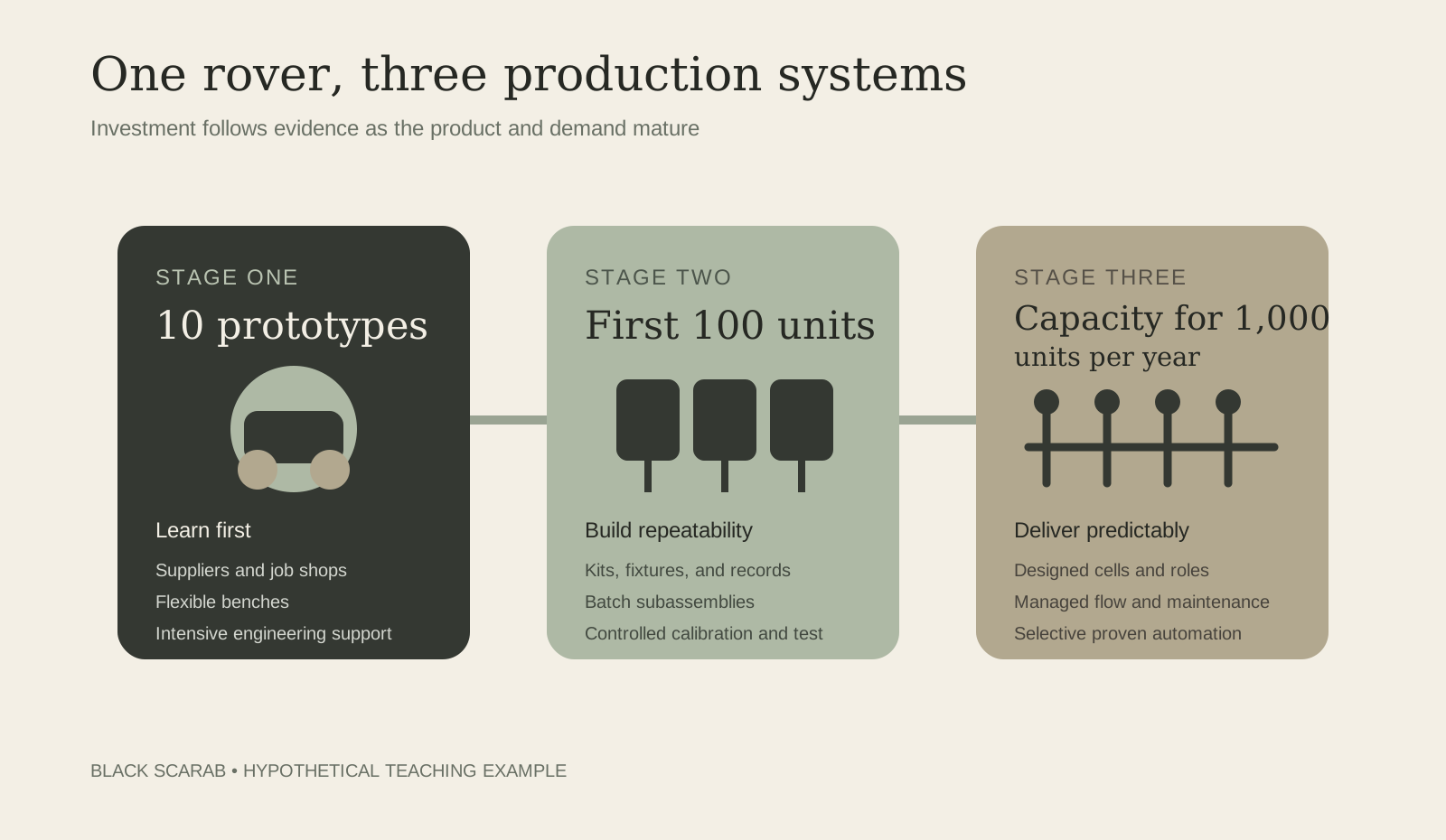
At ten prototypes, the team should optimize for learning. Standard components and outside suppliers reduce fixed investment. A local job shop can machine brackets. Enclosures can be cut and bent in small quantities. Engineers and technicians can assemble at flexible benches, record problems, revise work instructions, and run controlled tests. Unit labor will be high, but dedicated automation would freeze an immature process.
At the first one hundred units, repetition reveals patterns. The team can define approved suppliers, incoming checks, kitting, assembly fixtures, torque tools, software loading, calibration, final test, serial records, packaging, and a controlled area for nonconforming material. Selected subassemblies can move in batches while final assembly uses several linked stations. The objective is a stable process and trustworthy data, not a miniature version of a mass production line.
At capacity for one thousand units per year, the business can design around a known demand rate and product mix. It may add dedicated cells, line side material, replenishment routes, production control, planned maintenance, stronger test automation, and selective robotics. It still may outsource machining, circuit board assembly, molding, coating, or cable production when suppliers offer better economics and capability. Owning final assembly does not require owning every process.
How the Rover Production System Evolves
10 prototypes
Primary Goal
Learn whether the product and process work
Likely System
Suppliers, job shops, flexible benches, manual records, and intensive engineering support
Capital Discipline
Avoid dedicated equipment before requirements stabilize
First 100 units
Primary Goal
Create repeatability and traceability
Likely System
Kits, fixtures, controlled instructions, batch subassemblies, linked stations, and formal test
Capital Discipline
Invest in tools that reduce known quality and labor problems
Capacity for 1,000 per year
Primary Goal
Deliver predictably at the required rate and cost
Likely System
Designed cells, production control, trained roles, planned maintenance, managed inventory, and selective automation
Capital Discipline
Automate stable constraints with a measurable business case
| Stage | Primary Goal | Likely System | Capital Discipline |
|---|---|---|---|
| 10 prototypes | Learn whether the product and process work | Suppliers, job shops, flexible benches, manual records, and intensive engineering support | Avoid dedicated equipment before requirements stabilize |
| First 100 units | Create repeatability and traceability | Kits, fixtures, controlled instructions, batch subassemblies, linked stations, and formal test | Invest in tools that reduce known quality and labor problems |
| Capacity for 1,000 per year | Deliver predictably at the required rate and cost | Designed cells, production control, trained roles, planned maintenance, managed inventory, and selective automation | Automate stable constraints with a measurable business case |
Where Physical AI Can Enter the Plant
A factory map makes physical AI opportunities specific. At receiving, vision could identify damage or help verify labels under variable conditions. In storage, mobile robots could move material through changing traffic. In fabrication, adaptive sensing could help detect process drift. In assembly, vision guided robots could locate parts that are not perfectly presented. In quality, models could assist inspectors by highlighting unusual surfaces or patterns. In maintenance, systems could combine images, sound, vibration, and records to support diagnosis.
These are possible applications, not automatic business cases. Each one needs a defined task, operating envelope, error cost, response plan, safety architecture, data method, integration path, and owner. A model that detects an anomaly has not solved the process unless the plant knows what action follows, how that action is verified, and what happens when confidence is low.
The factory map also reveals where intelligence should not be confused with control. Reliable machine logic, guards, interlocks, emergency stops, and hazardous energy procedures remain essential. Physical AI can add perception and adaptation around a production task. It does not erase the engineered system that makes action safe and repeatable.
A Physical AI Opportunity Test
What physical variation defeats the current method?
Why It Matters
Defines the reason perception or adaptation may add value
What action will the system take?
Why It Matters
Connects a model output with useful physical work
What is the cost of a wrong decision?
Why It Matters
Sets the need for validation, supervision, and safe fallback
How will performance be measured?
Why It Matters
Prevents a demonstration from being mistaken for production evidence
Who owns operation and recovery?
Why It Matters
Makes support, training, and unusual conditions visible
| Question | Why It Matters |
|---|---|
| What physical variation defeats the current method? | Defines the reason perception or adaptation may add value |
| What action will the system take? | Connects a model output with useful physical work |
| What is the cost of a wrong decision? | Sets the need for validation, supervision, and safe fallback |
| How will performance be measured? | Prevents a demonstration from being mistaken for production evidence |
| Who owns operation and recovery? | Makes support, training, and unusual conditions visible |
Who Owns Each Part of the System
The factory owner defines the product, process requirement, acceptance criteria, operating model, and investment. Equipment suppliers provide machines and components. Machine builders combine mechanical, electrical, and control elements into purpose built equipment. Systems integrators connect robots, controls, vision, safety, software, and existing assets. Architecture and engineering firms design the building systems. Contractors install them. Service providers maintain selected assets. Contract manufacturers make components, subassemblies, or complete products.
Representative software and equipment companies illuminate these roles without describing the entire market. SAP Digital Manufacturing focuses on production execution and visibility between business and shop floor operations. Dematic presents material handling systems spanning receiving, storage, work in process, production, packaging, and dispatch. ZEISS Industrial Quality supplies measurement hardware and software. These vendors may participate in a plant, but none of their public portfolios alone defines the complete production result.
Responsibility must be explicit at the boundaries. Who unloads and accepts a new machine? Who provides power, air, network, fixtures, safety validation, recipes, programs, test material, training, spare parts, and final acceptance? A gap between scopes can delay a project even when every individual supplier delivered what its contract described.
Seven Beginner Mistakes
The first mistake is starting with machines instead of the product, volume, process, and acceptance requirement. The second is treating every square foot as equivalent, without considering power, floor loading, ventilation, access, fire protection, environmental control, or expansion. The third is minimizing movement while ignoring safety and maintainability.
The fourth mistake is assuming local efficiency creates factory efficiency. A machine can run constantly while producing inventory the next operation cannot use. The fifth is automating a changing process before the team understands its failure modes. The sixth is placing quality at the end, where defects have already absorbed material and labor. The seventh is buying equipment without assigning ownership for integration, startup, training, maintenance, data, and recovery.
A strong first plant rarely looks like the most automated option in a catalog. It looks like a system whose work is visible, whose risks have owners, whose constraints are measured, and whose next investment follows evidence.
Your Factory Learning Checkpoint
You should now be able to describe a factory without listing its machines. It is a system that receives controlled inputs, transforms them through an arranged production flow, verifies the result, and delivers an acceptable product. Supporting rooms and functions keep that visible route safe, supplied, documented, maintained, and economically useful.
You should also be able to classify a plant along two axes. Ask whether its output is discrete, process based, or a hybrid. Then ask whether work moves as a job shop, batches, a line, a continuous process, or a combination. Follow the material, find where it waits, identify the current bottleneck, and learn how the plant decides that the product is acceptable.
Five Questions to Ask on Your Next Factory Tour
What enters and what leaves?
What a Good Answer Reveals
The plant boundary and transformation
How does one unit or batch travel?
What a Good Answer Reveals
The real routing, waiting, handling, and control points
What limits acceptable output today?
What a Good Answer Reveals
The current system constraint
How is quality built in and recorded?
What a Good Answer Reveals
The measurement, traceability, and response system
What changes when demand or product mix changes?
What a Good Answer Reveals
The flexibility, capacity assumptions, and investment path
| Question | What a Good Answer Reveals |
|---|---|
| What enters and what leaves? | The plant boundary and transformation |
| How does one unit or batch travel? | The real routing, waiting, handling, and control points |
| What limits acceptable output today? | The current system constraint |
| How is quality built in and recorded? | The measurement, traceability, and response system |
| What changes when demand or product mix changes? | The flexibility, capacity assumptions, and investment path |
Next in the Series
Part 2 enters the machines. We will organize manufacturing equipment by the physical action it performs: remove, form, add, mold, cast, join, assemble, inspect, move, and package. We will examine what each machine needs around it, which companies supply and integrate it, how buyers compare alternatives, and where intelligence is beginning to change the work.
The rover will continue with us. Its frame, enclosure, shafts, gears, wheels, circuit boards, wiring, sensors, coatings, fasteners, software, and packaging will give every machine a purpose inside a complete product route.
Research Method
This report uses the 2022 North American Industry Classification System manufacturing definition and the Census Bureau's 2022 Economic Census manufacturing guidance. Production flow and plant layout analysis draws on NIST research and Manufacturing Extension Partnership material. Safety discussion uses current OSHA guidance for machine guarding, hazardous energy, warehousing, and loading docks. Production terms draw on NIST, the American Society for Quality, the Lean Enterprise Institute, and Massachusetts Institute of Technology course material.
Siemens descriptions help explain discrete and process manufacturing. Rockwell Automation material provides a vendor view of manufacturing execution and process types. Dematic, SAP, and ZEISS illustrate representative material handling, operations software, and industrial quality roles. Vendor statements identify how those companies describe their offerings and should not be read as independent performance validation or a complete market map.
The autonomous inspection rover, its bill of materials, and the stages at 10 prototypes, 100 early units, and capacity for 1,000 units per year are hypothetical teaching examples. They do not represent public pricing, performance, customers, supplier relationships, or production plans for a real product.

About the author
Rodolfo Garcia Calderoni, CFA
Rodolfo is the founder of Black Scarab, where he covers the technologies and commercial signals shaping physical AI adoption.
Meet RodolfoBlack Scarab Weekly
Catch up on physical AI in one email
Every new Black Scarab deep dive and news report, collected into one clear Thursday briefing.
Related Insights
Manufacturing
How Modern Manufacturing Works: A Beginner's Guide to Factories and Physical AI
A first principles map of the modern factory, from materials, machines, and production flow to automation, industrial software, company roles, and the emerging place of physical AI.
Read related insight
Manufacturing
Mexico Cannot Afford to Lose the Physical AI Race
Mexico’s manufacturing future depends on turning nearshoring into a lasting productivity advantage. That makes deep adoption of physical AI a strategic necessity and a major opening for the companies that can deliver it.
Read related insight
Manufacturing
Universal Robots UR Series Deep Dive: Collaborative Robot Arms, Machine Tending, Packaging, Assembly, Pricing, ROI, and Deployment Strategy
A business-focused deep dive on the Universal Robots UR Series, covering collaborative robot arms, machine tending, palletizing, packaging, assembly, welding, inspection, pricing context, ROI logic, UR+ ecosystem, and what leaders should verify before deploying cobots.
Read related insight
Next Step
Explore a commercial opportunity in Mexico
If you are exploring how a physical AI technology could fit the Mexican market, Black Scarab can help assess the opportunity, map relevant stakeholders, and define a credible commercial next step.