
Deep Dive · Industrial Robotics
Top Robotic Welding Systems in 2026: Eight Options Compared
Compare eight robotic welding systems for fabrication, repeat production and pipework, with public pricing, an interactive payback calculator and a look at adaptive AI and humanoids.
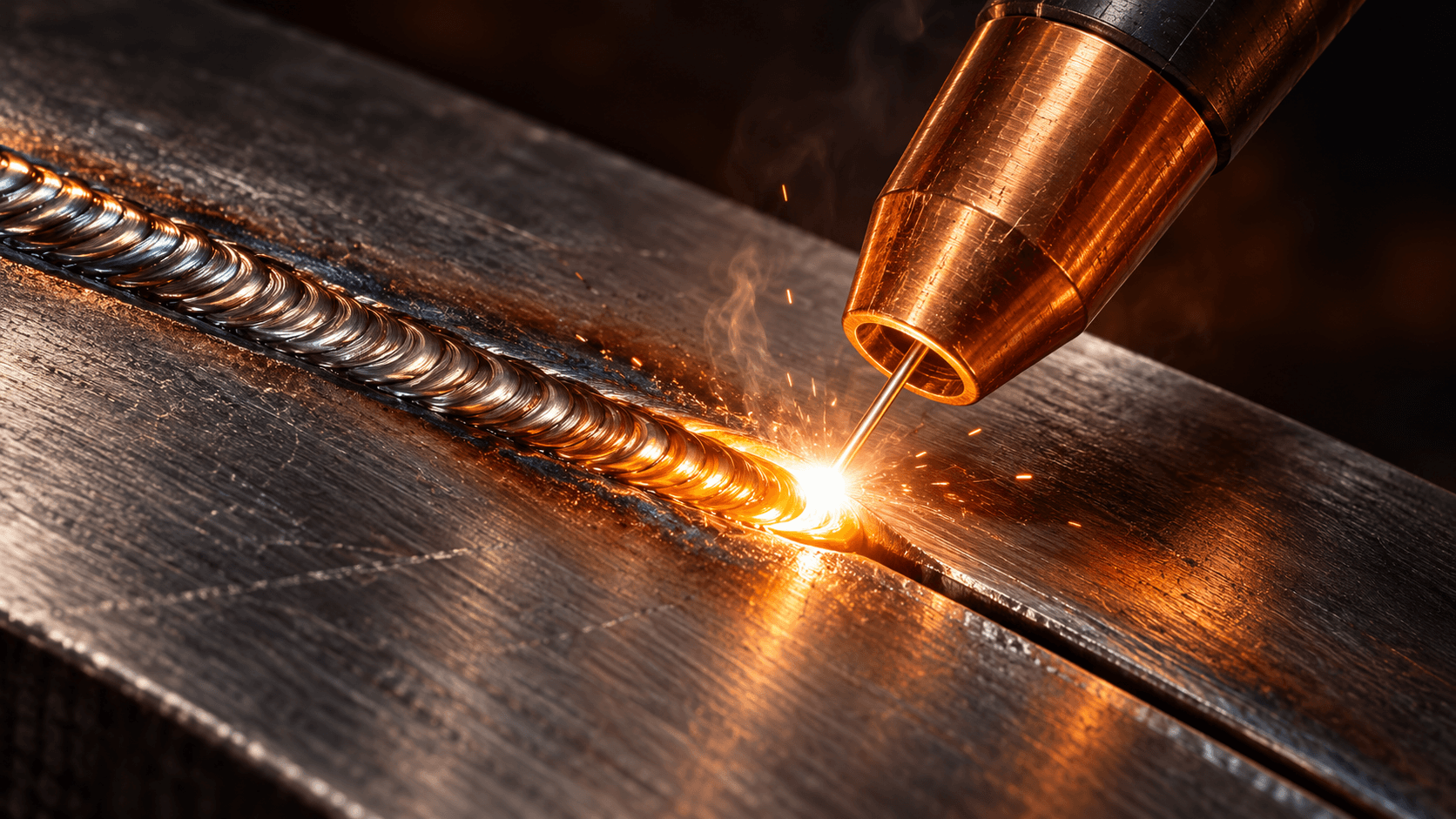
For a fabrication shop buying its first welding robot, we would start with Hirebotics, Miller Copilot Builder and Fronius CWC. For repeat production that benefits from dedicated fixtures and part positioning, compare Lincoln Electric Fab Pak, Yaskawa ArcWorld and ABB FlexArc. Novarc is the specialist to assess for rotating pipe spools; Path Robotics belongs on the shortlist when changing joint geometry makes conventional programming expensive.
The best robotic welding system is the installation that delivers accepted parts at a competitive cost. A fast torch can still spend most of its shift waiting for a fixture, a crane or the next program. This guide compares eight routes to arc welding automation, explains the commercial differences and lets you test the economics against your own workload.
The focus is fabrication with arc welding, especially MIG and MAG, with specialist TIG routes where documented. Resistance spot welding for body panels and laser welding require different process equipment and acceptance trials. Establish the joining process before choosing the robot.
Top robotic welding systems at a glance
Cobot packages
Start here for repeatable work taught by the fabrication team.
Hirebotics Cobot WelderOur first call for app based teachingFrom US$105,000
UR8 Long arm with 68.9 inch reach. Beacon teaching and monitoring.
Supplier starting offer; software upgrades and site work add cost.
Read our assessmentMiller Copilot BuilderReconfigurable work in a Miller shopPrice the chosen package
Auto Deltaweld 350 package; detachable components and touch sensing.
FANUC long arm, aluminum and Blue iQ models are separate configurations.
Read our assessmentFronius CWCA defined welding cell and process packageQuote the cell and tooling
CWC S: CRX 10iA arm and TPS 320i Pulse. CWC D adds two station operation.
CWC S working area without rotary unit: 1,500 × 1,000 × 700 mm.
Read our assessmentIndustrial cells
Compare the fixture, positioner and loading arrangement with the robot.
Lincoln Electric Fab PakRepeat production with an integrated processQuote the installed cell
CDZ combines a FANUC robot, Power Wave source and fixed table.
Positioning variants suit other geometries. Price extraction, tooling and installation explicitly.
Read our assessmentYaskawa ArcWorldCompact cells and coordinated part positioningQuote the regional model
RS uses a revolving door and table; larger CS systems offer other part envelopes.
Confirm the exact robot, fixture load and cell layout in the proposal.
Read our assessmentABB OmniVance FlexArcModular industrial welding with positionersQuote the configuration
Modular, LITE and Compact packages. FlexArc R lists up to 1,000 kg including fixtures.
The 1,000 kg figure is positioner capacity, separate from robot wrist payload.
Read our assessmentSpecialized systems
Shortlist these when joint geometry or part variation drives the investment.
Novarc Spool Welding RobotPipe spools that can rotate during weldingQuote process and positioners
Published SWR range: 2 to 60 inch pipe and pressure vessel applications.
Specify MIG, TIGMIG or TIPTIG and the required autonomy package.
Read our assessmentPath Robotics intelligent cellsHeavy fabrication with changing joint geometryService contract proposal
Vision guided seam finding, path planning and adaptive multipass fill.
Path advertises zero capital expenditure. Compare fees, term and accepted output.
Read our assessmentReviewed October 24, 2026. Shortlisted by application fit from manufacturer documentation and published deployment accounts. Open a system for configuration and commercial details.
Choose the production problem first
A cobot package is a good first candidate when a welder can teach a recurring family of parts and change fixtures without a large automation department. A standard industrial cell becomes more attractive when enough repeat work justifies dedicated tooling, coordinated positioners and a protected production area. Both can use sophisticated welding equipment; the arm category alone does not determine weld quality.
Pipework is a different workflow. A system designed to hold a torch over a rotating spool can solve the application more directly than a general six axis arm. Very large structures may instead call for a robot on a track, a gantry or equipment brought to the work.
We would shortlist two or three suppliers against one real part family. Send a difficult assembly as well as the easy demonstration piece. The winning proposal should explain how the plant prepares, loads, welds, inspects and releases the part, including the people still required.
How much does a robotic welding system cost?
Hirebotics currently advertises its Cobot Welder from US$105,000. Its pricing page describes the robot, welding equipment, mobile workstation, teaching tool and base Beacon software. This is a supplier starting offer for a defined package. Use it as an entry reference, then price your fixtures, extraction, site work and production acceptance requirements.
Software and service can change the recurring bill. Hirebotics lists Beacon Pro at US$80 per month per cobot, multipass welding at US$100 and seam tracking at US$100. Selecting all three adds US$3,360 a year. Beacon Care is a separate US$5,000 annual option. Choose features against the demonstrated process; a subscription name does not establish the joint variations the system can handle.
For Miller, Fronius and the industrial cells, request an itemized application proposal. Compare the same boundary: robot and controller, power source and wire delivery, torch and cooling, fixtures and positioners, sensing, torch cleaning, safeguarding, extraction, installation, programming, training and acceptance trials. Include consumables, maintenance and ongoing software separately.
Path advertises its intelligent welding cells through Robots as a Service with zero capital expenditure. That changes the payment structure. Compare the service fee, contract term, minimum usage, equipment scope, support response, weld acceptance responsibilities and exit terms against the purchase alternative. A financing offer, equipment starting price and installed project budget answer different questions.
Robotic welding capacity and payback calculator
Use a timed production trial to replace these illustrative inputs. Other cell time includes loading, movement, sensing and cleaning that extend the cycle. Operator time also includes attended work outside the cell cycle.
- Annual accepted capacity
- 14,254 parts
- Demand served
- 10,000 parts
- Annual net cash benefit
- $24,429
- Simple payback
- 6.1 years
Effective cycle: 6.60 minutes per attempt. Paid hours released: 1,388 per year, before the cash conversion assumption.
What if more saved hours reduce cash cost?
50% realized$12,286 a year
12.2 year payback
75% realized$24,429 a year
6.1 year payback
100% realized$36,571 a year
4.1 year payback
Calculation and assumptions
Capacity = scheduled minutes × availability × first pass yield ÷ (arc minutes + other cell minutes + setup minutes ÷ batch size). Annual accepted parts are capped at demand. Setup is spread across batches for planning.
Manual paid hours = accepted parts × manual minutes ÷ 60. Robot paid hours = attempted parts × (operator minutes + setup minutes ÷ batch size) ÷ 60. Operator minutes should include inspection and reject handling; include repair costs in annual operating cost. Enter availability after unplanned losses, with routine cleaning and setup counted in their own inputs.
Net benefit = released paid hours × cash conversion × labor cost, less extra annual operating cost. Additional labor requirements are charged in full. Payback = installed investment ÷ positive net annual benefit. This purchase model uses annual averages; add commissioning, financing, tax and ramp time to a detailed business case. Compare a service contract using its actual recurring fees.
What makes the payback real?
The calculator starts with a hypothetical US$150,000 installed project and 10,000 accepted parts a year. Four minutes of arc time, two minutes of other cell time and 30 minutes of setup every 50 attempts produce a 6.6 minute average cycle. At 2,000 scheduled hours, 80% availability and 98% first pass yield, estimated annual accepted capacity is 14,254 parts.
In the same example, manual work consumes 12 paid minutes per accepted part. The automated route uses three operator minutes per attempt plus setup, including time spent on the attempts that fail first pass inspection. It releases about 1,388 paid hours. At US$35 per hour, with 75% of those hours reducing cash cost and US$12,000 of extra annual running cost, net annual benefit is about US$24,429. Simple payback is about 6.1 years.
Realizing every released hour as cash improves that example to roughly 4.1 years. Moving a welder to another bottleneck can be valuable, but it becomes cash savings only through a change such as reduced overtime or avoided hiring. Additional sales belong in a separate contribution margin case, supported by demand and capacity elsewhere in the plant.
Measure labor time and cell time separately. Loading may overlap with welding on a second station, while inspection can consume paid time without extending the robot cycle. Count setup once in each relevant measure. For a small batch, a 30 minute setup spread across five parts adds six minutes per attempt before production even begins.
Hirebotics Cobot Welder: Our first call for simple teaching
Hirebotics packages a Universal Robots UR8 Long arm with a mobile workstation, welding equipment and Beacon software. Its product page lists 68.9 inches of arm reach and an Auto Deltaweld 350 configuration, with other power source choices. The operator guides the torch and saves points with the Smart Puck, then runs and monitors the job through a phone, tablet or browser.
Our reason to shortlist it is the teaching workflow. A shop making recurring brackets and frames can assess whether its welders can own the program changes. Test that with a normal operator and a real fixture change, including edits to torch angle and restart behavior.
Move to another configuration when the arm cannot access the seams or the required process exceeds the chosen torch and power package. On the current product page, linear rail, index table, overhead gantry and headstock options are marked coming soon. A project requiring one of those needs a confirmed delivery commitment before those features enter its business case.
Miller Copilot Builder: A configurable route for Miller shops
Miller Copilot Builder is worth a first look where the fabrication team already uses Miller processes and wants to rearrange the equipment around its work. The documented Auto Deltaweld 350 package includes a cobot arm and controller, torch, wire drive, cable bundle and starter consumables. Its components arrive on a pallet and can be detached and repositioned.
The family includes standard Copilot, reconfigurable Builder, aluminum configurations, a FANUC long arm variant and Builder with Blue iQ powered by NovAI. The latter is presented as adapting to changes in joint location and gap. Confirm the exact model in the quotation: an option shown in the family comparison does not automatically belong to every package.
We would evaluate Builder for mixed fabrication where a fixed table limits access. Bring representative assemblies and compare time to first accepted part after a changeover. Choose a different system if repositioning, cable routing or fixture work consumes the time saved by easier programming.
Fronius CWC: A defined cell around the welding process
Fronius CWC suits a buyer who wants the welding process and cell supplied as a coherent package. The documented CWC S combines a FANUC CRX 10iA with a Fronius TPS 320i Pulse, CU 1100i cooling unit and WF 25i wire feeder. Its published maximum work area is 1,500 by 1,000 by 700 mm without the rotary unit; the rotary configuration instead lists 860 mm length and 450 mm diameter.
The broader range changes the production arrangement. CWC mobile is the portable table route. CWC D allows one station for larger work or two stations so preparation and welding can run in parallel. CWC Extended addresses custom requirements, including MIG, MAG or TIG processes and additional axes.
Our preference is to evaluate the smallest cell that covers the complete joint and fixture. The enclosure and loading opening matter as much as nominal arm reach. Reject a proposal if the workpiece fits inside the cell but clamps, torch approach or removal of the finished part make production impractical.
Lincoln Electric Fab Pak: Industrial repeat production
Lincoln Electric Fab Pak is our starting point when a defined industrial cell and welding process offer a better fit than a movable cobot table. The CDZ configuration documented by Wolf Robotics combines a FANUC welding robot, Lincoln Power Wave source, AutoDrive wire feeder, Magnum Pro torch, fixed table and protective equipment.
The system page identifies tooling, fume extraction, torch cleaning and installation among the options. That is a useful reminder to price the full operating installation. The broader family includes indexing tables, headstock arrangements, Ferris Wheel and Skyhook configurations, allowing the workpiece presentation to change with the application.
We would compare this route for a steady stream of subassemblies whose fixtures can hold joint locations reliably. Favor a positioner when it improves access and welding posture enough to justify the additional equipment. A basic fixed table is a poor fit if an operator repeatedly enters the process to turn the part by hand.
Yaskawa ArcWorld: Match the cell to the part envelope
Yaskawa ArcWorld is a family of welding cells rather than one robot specification. The European range presents RS as a compact transition from manual welding, using a revolving door and table. HS addresses training and welding setup, while larger CS arrangements accommodate other workpiece sizes and loading needs.
The useful comparison is the complete regional model. Specify the robot, welding package, positioner, fixture mass, turning diameter, part length and access for lifting equipment. Yaskawa also describes offline programming and simulation through a digital twin, which can help prepare programs while the physical cell keeps producing.
We would shortlist ArcWorld where a standard cell layout closely matches recurring production and the plant can maintain the programming and tooling. Eliminate a candidate when its real clamped assembly cannot rotate through the envelope, or when loading the next part requires production to wait despite the proposed station arrangement.
ABB OmniVance FlexArc: Modular cells and part positioning
ABB offers OmniVance FlexArc as complete modular welding systems, with Modular, LITE and Compact packages addressing different production layouts. The FlexArc R listing specifies an IRP R positioner for workpieces up to 1,000 kg including fixtures. That is part positioning capacity, not the robot arm’s carried payload.
We would evaluate FlexArc when coordinated robot and part movement are central to the job, especially in a plant with ABB support skills. McAlpin Industries’ own equipment announcement describes installing a B 750 FlexArc cell with an IRB 2600ID and a synchronous positioner. ABB’s Katcon account describes transferring programs between cells using the same jig design. Both illustrate the value of the surrounding tooling and program discipline.
For a new proposal, confirm the current controller, power source, positioner and software bundle together. Favor the modular route when repeated fixtures and programs can be reused. A custom layout may be more appropriate when the assembly, lifting route or torch access falls outside the standard cell.
Novarc SWR: The specialist for rotating pipe spools
Novarc’s Spool Welding Robot addresses pipe and roll welding directly. Its published SWR specifications cover pipe and pressure vessel applications from 2 to 60 inches, with carbon and low alloy steels, stainless steel and nickel alloys. The listed processes include GMAW, FCAW and MCAW. Novarc offers separate TIGMIG and TIPTIG variants, so the process route belongs in the model selection.
The SWR uses a compact welding head, a manipulator and positioner integration rather than asking a general robot arm to solve every part presentation problem. NovEye Assist adds functions including root seam tracking and torch distance control; NovEye Autonomy is presented as hands free welding from root to cap. Specify which automation package is being demonstrated.
We would assess SWR early for a spool shop that can rotate its work and has enough repeat joints to keep the system occupied. Test the actual diameter range, bevels, tacks and fit up against the required inspection. Fixed position field welds or assemblies that cannot rotate may call for a different machine architecture.
Path Robotics: Adaptive welding for variable heavy fabrication
Path is worth evaluating when the cost of programming and maintaining paths across changing parts is a major barrier to automation. Its intelligent welding cells combine vision guided seam finding and path planning with adaptive multipass fill. Path says its system scans the joint, determines the passes required to fill it and adjusts to variation between parts.
The technical distinction is the Obsidian control approach. Path describes a reinforcement learning agent trained inside its Weld World Model and deployed at the edge. Its sensor stack provides observations before, during and after welding. Those are company descriptions of the architecture; the production trial should establish the joint and fit up range it handles for the buyer.
We would put a changing heavy fabrication part family through that trial and measure accepted output, interventions and preparation effort. Compare its service contract with the cost of conventional fixtures, programming and maintenance over the same period. The decisive result is a bounded, repeatable production process with clear responsibilities for exceptions and repairs.
What the complete welding system has to do
The robot holds and moves the torch. The welding power source, wire feeder, gas supply, torch and cooling arrangement establish the process it can execute. Fixtures locate the joint; positioners can bring it into a better orientation. Sensors help locate or follow it. Torch cleaning and consumable replacement keep the process consistent through a shift.
Robot and cell controllers coordinate motion, welding signals and external axes locally. Adaptive systems add sensing and computation close enough to the process to respond while welding. Monitoring portals and remote support are a different layer. Ask the supplier to demonstrate which production functions remain available when the internet connection is interrupted.
- 01
Present the joint
Fixtures, clamps and positioners make the seam accessible and repeatable.
- 02
Locate and plan
A taught path, touch sensing or vision establishes where the torch should travel.
- 03
Control the weld
Robot motion, wire feed, shielding gas and the power source execute the procedure.
- 04
Inspect and release
Inspection determines acceptance; process records support traceability.
Test accepted parts with the final process active
A robot can follow a programmed path accurately and still produce an unacceptable weld. Variation in joint location, gap, surface condition, tack placement or distortion changes the work. Touch sensing can relocate a start point; seam tracking can correct a path; adaptive process control may change welding behavior. Establish which variation each function actually addresses.
Agree the welding procedure, materials, joint preparation and inspection method with the team responsible for acceptance. Measure first pass yield and repair effort alongside cycle time. A smooth visible bead does not establish penetration or internal soundness. The American Welding Society’s robotic welding qualification program covers process knowledge, equipment setup, inspection, procedures and programming, reflecting the range of skills the plant still needs.
Run output trials with the final safeguarding and extraction operating. Collaborative arm behavior addresses only part of a welding application’s risk: arc radiation, hot metal, fumes, fixtures and external axes affect how the station can be used. The practical procurement question is whether the approved installation achieves the promised production cycle.
Three practical buying situations
A fictional job shop produces 20 frame variants in recurring batches. Its first comparison should be cobot teaching, fixture changeover and access to awkward corners. A cell that saves a few seconds of welding but takes much longer to prepare the next batch may lose the economic comparison.
A fictional equipment manufacturer runs the same welded subassembly across two shifts. It should compare dedicated industrial cells with fixtures and positioners that let the operator prepare the next part during welding. The key result is accepted assemblies per paid shift, including torch cleaning, inspection and replenishment.
A fictional pipe fabricator has recurring spool joints but difficult bevels and tack variation. It should assess the specialized SWR process against its own procedure and inspection requirements. A demonstration on an easy shop sample would leave the main production question unanswered.
What adaptive AI could change next
The next useful improvement is reducing the engineering and attention needed for each new joint. Easier teaching helps with programming. Better perception helps locate what was actually loaded. Adaptive welding can potentially respond to conditions that emerge after the arc starts. These solve different parts of the production problem.
Miller’s Blue iQ offering powered by NovAI and Path’s Obsidian show two current supplier approaches to adaptation. Our expectation is that competition will increasingly turn on the range of variation a system can handle within an accepted welding process, and how much supervision it requires. That is more commercially meaningful than a broad claim that a robot uses AI.
Ask for a trial with deliberately varied joints inside the plant’s real production tolerances. Record adjustments, exceptions and rejected parts as well as successful welds. A supplier that can state a clear operating range gives the buyer a stronger basis for expansion.
Will humanoid robots become welding systems?
Humanoids introduce the possibility of bringing a welding tool to work designed around human access, especially on large structures. Persona AI has described a live shop welding demonstration at ARC Specialties using teleoperation. Its own account explains that expert operation supplies training data for future autonomous work.
That is a development path with a different commercial proposition from a fixed production cell. Mobility could reduce the need to move a large structure or build a dedicated installation around every location. It also adds balance, tool handling, utilities and task supervision to an already demanding process.
Our near term view is that a fixed arm, a positioner or a specialized pipe system remains the first comparison for recurring work that can be presented reliably. Assess a humanoid when access and mobility create enough value to justify it, using accepted welds over a working shift as the common test.
One acceptance trial for every shortlisted supplier
Send each bidder the same drawings, material specifications, joint preparation, fit up range, fixture concept, annual volumes and batch mix. Include lifting and access constraints, utilities, welding procedures and inspection requirements. Ask for a clear division of responsibility for tooling, commissioning, qualification and continuing support.
Define a timed trial covering accepted parts per shift, first pass yield, repair work, changeover time, interventions and operator attention. Include a difficult batch and an ordinary consumable change. Test recovery from an interrupted weld and a bad presentation.
Price the final demonstrated arrangement. A second station, a better positioner or consistent upstream preparation may create more value than a more expensive robot. For each addition, ask which measured production loss it removes.
Black Scarab Weekly
Follow the physical AI economy
Get Black Scarab news, deep research, and practical analysis in one clear Thursday briefing.
Black Scarab verdict
For a first recurring fabrication task, our initial shortlist is Hirebotics for its teaching workflow, Miller Copilot Builder for reconfiguration around an established welding process, and Fronius CWC for a defined cell package. For dedicated production, compare Lincoln Electric Fab Pak, Yaskawa ArcWorld and ABB FlexArc against the same fixtures, part positions and acceptance trial.
Move Novarc to the front for rotating pipe spools, and assess Path when joint variation and programming effort drive the economics. The strongest investment is the system the plant can keep supplied, qualified and productive. Buy against accepted output and the actual cost of running it.
Reporting notes and sources
Researched October 24, 2026 using manufacturer product documentation, supplier deployment accounts, a customer equipment announcement and American Welding Society material. The shortlist reflects Black Scarab’s assessment of application fit from desk research. Product specifications, adaptive capabilities and deployment accounts are attributed to their sources. Capacity, labor and payback examples are hypothetical.
- Hirebotics Cobot Welder configuration and current option status
- Hirebotics public system pricing
- Hirebotics Beacon software and service prices
- Miller Copilot family and Blue iQ comparison
- Miller Copilot Builder Auto Deltaweld 350 package
- Fronius CWC S configuration and working envelope
- Fronius CWC mobile, CWC D and extended range
- Lincoln Electric Automation Fab Pak CDZ configuration and options
- Lincoln Electric Automation Fab Pak range
- Yaskawa ArcWorld family and production arrangements
- Yaskawa ArcWorld RS and HS current product listing
- ABB OmniVance application cell range
- ABB FlexArc R positioner specification
- McAlpin Industries describes its ABB FlexArc installation
- ABB Katcon case study on repeat tooling and program transfer
- Novarc SWR specifications and automation packages
- Path Robotics intelligent welding cells and service model
- Path Robotics Obsidian and Weld World Model architecture
- American Welding Society robotic welding personnel qualification
- American Welding Society robotic welding risk assessment and training standards
- Welding Digest on welding automation and the work around the robot, October 2026
- Persona AI describes its teleoperated welding development

About the author
Rodolfo is the founder of Black Scarab, where he covers the technologies and commercial signals shaping physical AI adoption.
Meet RodolfoBlack Scarab Weekly
Follow the physical AI economy
Get Black Scarab news, deep research, and practical analysis in one clear Thursday briefing.
Related Insights
Industrial Robotics
Best Robotic Palletizers in 2026: Top Systems Compared
Compare eight robotic palletizing options by application, payload, throughput and price, calculate payback, and explore what smarter software and humanoid robots could change.
Read related insight
Industrial Robotics
Palladyne AI Deep Dive: Edge AI, Robot Software, Hardware, and Pricing
Inside Palladyne IQ, Pilot, and SwarmOS: how local robot intelligence works, which companies supply the hardware, what the FANUC collaboration changes, and how buyers should assess performance, cost, and deployment.
Read related insight
Industrial Robotics
Persona AI Deep Dive: Industrial Humanoid Robots for Welding and Shipbuilding
A complete analysis of Persona AI's industrial humanoid platform, hardware architecture, NASA hand technology, welding strategy, customers, leasing model, pricing, competitors, deployment process, and commercial risks.
Read related insight